The Arte Alameda Laboratory reopens with three exhibitions that explore memory, heritage, and the vestiges of history.
Reabre el Laboratorio de Arte Alameda con tres exposiciones que exploran la memoria, el patrimonio y los vestigios de la historia.
Following a comprehensive restoration, the Ministry of Culture of the Government of Mexico and the INBAL present the exhibitions Pentimento , by Pablo Rasgado; Fables to Sleep By, by Josué Mejía; and Suspended State , by the TRES collective
Tras una restauración integral, la Secretaría de Cultura del Gobierno de México y el INBAL presentan las exposiciones Pentimento, de Pablo Rasgado; Fábulas para dormir, de Josué Mejía, y Estado suspendido, del colectivo TRES
13.6.2026
Secretaría de Cultura
Secretaría de Cultura
- The exhibitions, curated by Gemma Argüello and conceived specifically for the LAA, engage with the building's material memory, cultural collections, and historical vestiges that make up Mexico's artistic heritage.
The Ministry of Culture of the Government of Mexico, through the National Institute of Fine Arts and Literature (INBAL) and the Laboratorio Arte Alameda (LAA), reopened the doors of the venue today, Saturday, June 13, 2026, after a comprehensive restoration process, with the inauguration of three exhibitions that explore the relationships between memory, heritage, archive and material vestiges: Pentimento , by Pablo Rasgado; Fables to Sleep By , by Josué Mejía, and Suspended State , by the collective TRES, made up of Ilana Boltvinik and Rodrigo Viñas.
In this regard, the Secretary of Culture of the Government of Mexico, Claudia Curiel de Icaza, has commented that the restoration of the Laboratorio Arte Alameda is a demonstration of the administration's commitment to the care of spaces that safeguard the country's memory: "By preserving our cultural infrastructure we can guarantee that contemporary art continues to circulate and engage in dialogue with new generations of audiences, in dignified and appropriate spaces."
During the inauguration, the general director of INBAL, Alejandra de la Paz Nájera, highlighted that, with the reopening, the building, “which is part of the history of the Historic Center, not only recovers its former splendor, but can also function in a better way for its current vocation, which is precisely a laboratory of experimentation.”
De la Paz acknowledged the work done by the Ministry of Culture of the Government of Mexico, the INBAL, the Historic Center Trust and the National Institute of Anthropology and History to intervene in the vaults, the dome and various architectural elements of the building, as well as the effort of the LAA team to finalize the reopening and the production of the new exhibitions.
She emphasized the importance of the historical collections housed at INBAL, an institution celebrating its 80th anniversary, as well as the documentary and sound preservation work that allows the materials to engage with contemporary artistic practices. “The Laboratorio de Arte Alameda is now open forever,” she declared, inviting the public to explore the exhibitions.
For his part, the director of the space, Javier de la Riva, explained that “the three exhibitions were developed specifically for the venue and share a reflection on the history, memory and heritage remnants of both the building and the cultural evolution of Mexico.”
Under the curatorship of Gemma Argüello, the exhibitions transform the material traces of different moments in the country's cultural history into material for contemporary creation: from the viceregal past of the building and the architectural transformations it has undergone throughout the centuries, to the educational projects promoted during the Cardenismo era and the technical memory of the Palace of Fine Arts.
In the central nave , Pentimento , a project by Pablo Rasgado, is on display. It emerged concurrently with the building's restoration. The exhibition unfolds as an exercise in speculative archaeology, tracing the building's various historical stages, from its origins as part of the former Convent of San Diego to its transformation into the headquarters of the Viceroyalty Art Gallery.
Through test pits made in the walls, exposed structures, altered reproductions of works that were part of the old Viceroyal Art Gallery and materials recovered during the restoration, the exhibition reveals the multiple layers of time accumulated in the architecture.
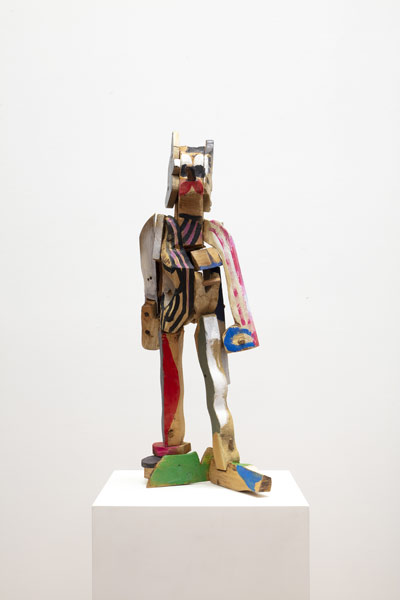
In the Chapel of Sorrows , the installation "Fables for Sleeping ," by Josué Mejía, is on display. It is constructed from the Reading Books for use in the Night Schools for Workers that circulated during the 1930s and 1940s. The piece recovers engravings made by members of the League of Revolutionary Writers and Artists (LEAR), originally conceived as literacy and political training tools for the working population.
The installation engages in dialogue with the mural The Informants of Sahagún , by Federico Cantú, and with the history of the site itself, since the space where the work is located was originally designed to house a library.
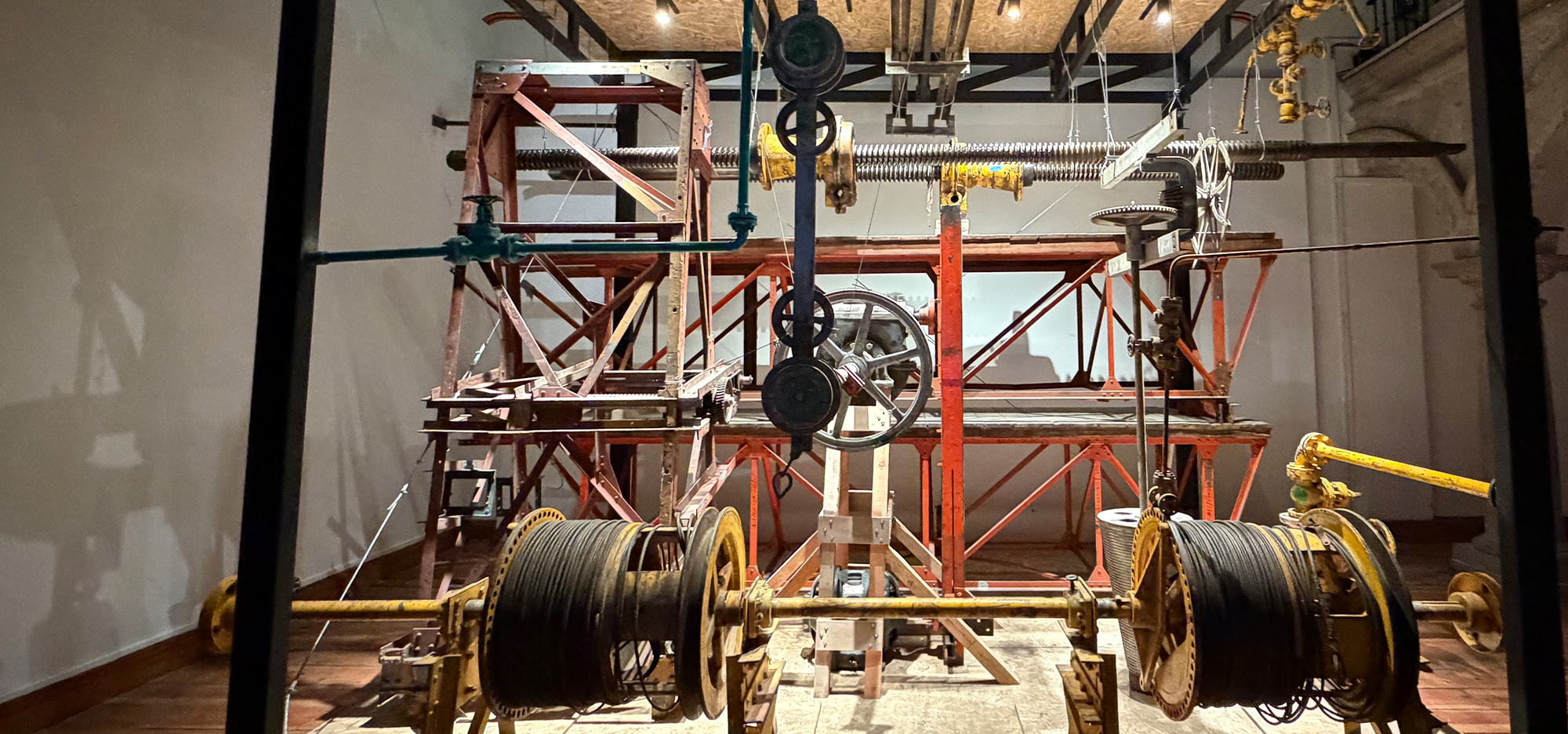
Meanwhile, Estado Colgante (Suspended State ), by Ilana Boltvinik and Rodrigo Viñas, members of the TRES collective, stems from an artistic investigation into archives, inventories, and the management of historical artifacts. The exhibition incorporates original elements of the stage machinery of the Palacio de Bellas Artes (Palace of Fine Arts), preserved after recent renovations, and transforms them into the foundation of an installation that examines both the technical history of the venue and the collective's trajectory.
The exhibition brings together structures from the theater's mechanical systems, historical records, and sound materials created from recordings preserved by the National Sound Archive. By transferring these elements to the museum space, the exhibition makes visible an infrastructure that is usually hidden and pays homage to the generations of workers who made the daily operation of the Palace of Fine Arts possible.
The exhibitions Pentimento , Fables to Sleep By and Suspended State will remain open to the public until October 18, 2026 at the Laboratorio Arte Alameda, located at Dr. Mora 7, Historic Center of Mexico City.
With the reopening, the Ministry of Culture of the Government of Mexico and the National Institute of Fine Arts and Literature reaffirm their commitment to the preservation of historical heritage and the promotion of contemporary creation, fostering new forms of encounter between artists, communities and diverse audiences.
- Las muestras, curadas por Gemma Argüello y concebidas específicamente para el LAA, dialogan con la memoria material del edificio, los acervos culturales y los vestigios históricos que conforman el patrimonio artístico de México
La Secretaría de Cultura del Gobierno de México, a través del Instituto Nacional de Bellas Artes y Literatura (INBAL) y del Laboratorio Arte Alameda (LAA), reabrió hoy sábado 13 de junio de 2026 las puertas del recinto tras un proceso de restauración integral, con la inauguración de tres exposiciones que exploran las relaciones entre memoria, patrimonio, archivo y vestigios materiales: Pentimento, de Pablo Rasgado; Fábulas para dormir, de Josué Mejía, y Estado suspendido, del colectivo TRES, integrado por Ilana Boltvinik y Rodrigo Viñas.
Al respecto, la secretaria de Cultura del Gobierno de México, Claudia Curiel de Icaza, ha comentado que la restauración del Laboratorio Arte Alameda es una muestra del compromiso de la administración con el cuidado de los espacios que resguardan la memoria del país: “Preservando nuestra infraestructura cultural podemos garantizar que el arte contemporáneo siga circulando y en diálogo con nuevas generaciones de públicos, en espacios dignos y adecuados”.
Durante la inauguración, la directora general del INBAL, Alejandra de la Paz Nájera, destacó que, con la reapertura, el inmueble, “que es parte de la historia del Centro Histórico, recobra no solamente su antiguo esplendor, sino que también puede funcionar de una mejor manera para su vocación actual, que es justamente un laboratorio de experimentación”.
De la Paz reconoció el trabajo realizado por la Secretaría de Cultura del Gobierno de México, el INBAL, el Fideicomiso del Centro Histórico y el Instituto Nacional de Antropología e Historia para intervenir las bóvedas, la cúpula y diversos elementos arquitectónicos del edificio, así como el esfuerzo del equipo del LAA para concretar la reapertura y la producción de las nuevas exposiciones.
Y destacó la importancia de los acervos históricos que resguarda el INBAL, institución que cumple 80 años, así como el trabajo de conservación documental y sonora que permite que los materiales dialoguen con las prácticas artísticas contemporáneas. “El Laboratorio de Arte Alameda ya está abierto para siempre”, expresó al invitar al público a recorrer las exposiciones.
Por su parte, el director del espacio, Javier de la Riva, explicó que “las tres muestras fueron desarrolladas específicamente para el recinto y comparten una reflexión sobre la historia, la memoria y los residuos patrimoniales tanto del edificio como del devenir cultural de México”.
Bajo la curaduría de Gemma Argüello, las exposiciones convierten los rastros materiales de distintos momentos de la historia cultural del país en materia de creación contemporánea: desde el pasado virreinal del inmueble y las transformaciones arquitectónicas que ha experimentado a lo largo de los siglos, hasta los proyectos educativos impulsados durante el cardenismo y la memoria técnica del Palacio de Bellas Artes.
En la nave central se presenta Pentimento, proyecto de Pablo Rasgado, que surgió paralelamente a los trabajos de restauración del inmueble. La exposición se despliega como un ejercicio de arqueología especulativa que recorre las distintas etapas históricas del edificio, desde sus orígenes como parte del antiguo Convento de San Diego hasta su transformación en sede de la Pinacoteca Virreinal.
A través de calas realizadas en los muros, estructuras expuestas, reproducciones intervenidas de obras que formaron parte de la antigua Pinacoteca Virreinal y materiales recuperados durante la restauración, la muestra revela las múltiples capas de tiempo acumuladas en la arquitectura.
En la Capilla de Dolores se exhibe Fábulas para dormir, instalación de Josué Mejía, construida a partir de los Libros de Lectura para uso de las Escuelas Nocturnas de Trabajadores que circularon durante las décadas de 1930 y 1940. La pieza recupera grabados realizados por integrantes de la Liga de Escritores y Artistas Revolucionarios (LEAR), concebidos originalmente como herramientas de alfabetización y formación política para la población trabajadora.
La instalación dialoga con el mural Los informantes de Sahagún, de Federico Cantú, y con la propia historia del recinto, pues el espacio donde se ubica la obra fue proyectado originalmente para albergar una biblioteca.
Por su parte, Estado suspendido, de Ilana Boltvinik y Rodrigo Viñas, integrantes del colectivo TRES, parte de una investigación artística sobre el archivo, los inventarios y la gestión de vestigios históricos. La muestra incorpora elementos originales de la mecánica escénica del Palacio de Bellas Artes, resguardados tras las remodelaciones realizadas de manera reciente, y los convierte en el soporte de una instalación que revisa tanto la historia técnica del recinto como la trayectoria del colectivo.
La obra reúne estructuras provenientes de los sistemas mecánicos del teatro, registros históricos y materiales sonoros construidos a partir de grabaciones preservadas por la Fonoteca Nacional. Al trasladar dichos elementos al espacio museístico, la exposición vuelve visible una infraestructura habitualmente oculta y rinde homenaje a generaciones de trabajadoras y trabajadores que hicieron posible el funcionamiento cotidiano del Palacio de Bellas Artes.
Las exposiciones Pentimento, Fábulas para dormir y Estado suspendido permanecerán abiertas al público hasta el 18 de octubre de 2026 en el Laboratorio Arte Alameda, ubicado en Dr. Mora 7, Centro Histórico de la Ciudad de México.
Con la reapertura, la Secretaría de Cultura del Gobierno de México y el Instituto Nacional de Bellas Artes y Literatura refrendan su compromiso con la preservación del patrimonio histórico y el impulso a la creación contemporánea, favoreciendo nuevas formas de encuentro entre artistas, comunidades y públicos diversos.
No items found.