Néstor Jiménez recreates the epic of the common man
Néstor Jiménez recrea la epopeya del hombre común
The artist will open the exhibition One Among Millions at the University Museum of Contemporary Art on February 7; it includes six large-format works.
El artista abrirá en el Museo Universitario de Arte Contemporáneo la muestra Uno entre millones el 7 de febrero; incluye seis obras en gran formato
2.2.2026
By: Abida Ventura for La Razón
Por: Abida Ventura para La Razón
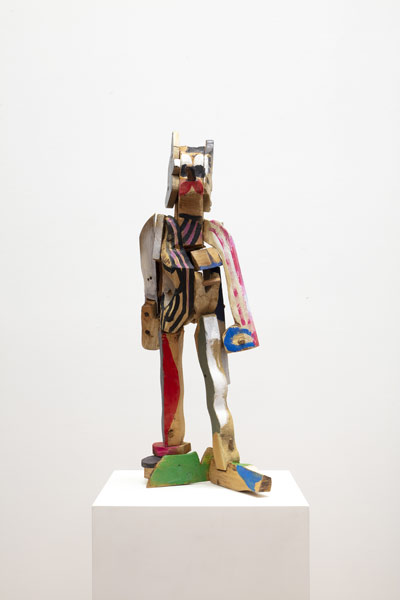
The University Museum of Contemporary Art (MUAC) will open the exhibition "One Among Millions " by artist Néstor Jiménez (Mexico City, 1988) on February 7. The exhibition comprises six large-format works that outline "the epic of the common man." Education, work, housing, food, death, and memory are the six concepts that articulate this show, which includes easel painting, collage, ceramic sculpture, kinetic sculpture, and mural painting. In these art forms, the artist, who is also a painter, uses materials associated with diverse social classes to question the capitalist system and its impact on daily life.
Among these pieces is the collage One Among Millions , which consists of six modules with 300 silhouettes of informal workers made from newspaper clippings. Inspired by a working technique of the Danish author Hans Christian Andersen, author of The Ugly Duckling , Jiménez set out to represent a “grand social tale” here: “Each character represents an informal worker in Mexican society and the role they play. There are street vendors, car washers, cotton candy sellers, balloon vendors; street clowns. All those work activities that the average person performs in their daily life when they are outside of what is understood as academic professionalization,” the artist explained in an interview with La Razón .
Each of these figures provides information about Mexico itself and current working conditions: "The advertisements you read when you approach the characters often refer to very precarious jobs," he explains.
The artist explains that when creating the collage , he set out to follow the ritual of someone looking for a job: “Getting up early, going to get the newspaper, cutting out a certain number of people each day to meet a goal. Many times the newspaper no longer offered enough ads, and it was shocking because it was like a chain of unemployment, an extension of the lack of work in the country that, in turn, prevented me from doing my own job.”
One in a Million is part of the exhibitions that MUAC has been commissioning since 2024, featuring young artists whose works offer “a critical perspective on social structures that perpetuate inequality and hegemonic positions.” Jiménez’s work is characterized by its exploration of social, political, and historical memory themes, but also stands out for its use of recycled and construction materials, such as cement.
“The idea of using these materials is related to my own experience. I was familiar with the use and handling of concrete long before I was familiar with oil paint. I come from a typical working-class family, where many of the repairs that needed to be done at home were done by the family. I even helped my father with plastering, repairing cracks, and even small constructions, like small storage sheds. For me, the presence of these materials was there long before I understood what a fine art material was ,” shares the artist, a graduate of the National School of Painting, Sculpture, and Engraving “La Esmeralda.”
El Museo Universitario de Arte Contemporáneo (MUAC) abrirá a partir del próximo 7 de febrero la exposición Uno entre millones, del artista Néstor Jiménez (Ciudad de México, 1988), conformada por seis obras en gran formato que delinean “la epopeya del hombre común”. Educación, trabajo, vivienda, alimentación, muerte y memoria. Son los seis conceptos que articulan esta muestra que incluye pintura de caballete, collage, escultura en cerámica, escultura cinética y pintura mural, artes en las que el también pintor utiliza materiales asociados a clases sociales diversas para cuestionar el sistema capitalista y su impacto en la vida cotidiana.
Entre esas piezas está el collageUno entre millones, que consiste en seis módulos con 300 siluetas de trabajadores informales hechos con recortes de avisos oportunos de periódicos. Inspirado en una técnica de trabajo del danés Hans Christian Andersen, autor de El patito feo, Jiménez se planteó representar aquí un “gran cuento social”: “Cada personaje representa un trabajador informal en la sociedad mexicana y el rol que desempeña. Hay comerciantes, lavacoches, vendedores de algodones de azúcar, de globos; payasos callejeros. Todas esas actividades laborales que el hombre común desempeña en su día a día cuando está fuera de lo que se entiende como profesionalización académica”, cuenta el artista en entrevista con La Razón.
Cada una de estas figuras arroja información sobre México mismo y las condiciones laborales actuales: “Los anuncios que se leen cuando te acercas a los personajes, muchas veces se refieren a trabajos muy precarizados”, detalla.
El artista explica que al elaborar el collage se propuso seguir el ritual de alguien en busca de empleo: “Levantarse temprano, ir por el periódico, recortar un número determinado de personajes al día para cumplir una meta. Muchas veces el periódico ya no ofrecía la cantidad suficiente de anuncios y fue impactante porque era como una cadena de desempleo, una extensión de la falta de trabajo en el país que, a su vez, impedía que yo pudiera realizar el mío”.
Uno entre millones es parte de las exposiciones que el MUAC comisiona, desde 2024, a artistas jóvenes cuyas obras ofrecen “una mirada que critica estructuras sociales que perpetúan la inequidad y posiciones hegemónicas”. La de Jiménez se caracteriza por abordar temas sociales, políticos y de memoria histórica, pero también destaca por el uso de materiales reciclados y de construcción, como el cemento.
“La idea de usar estos materiales está relacionado con mi propia experiencia. Yo conocí el uso y manejo del concreto mucho antes que el óleo. Pertenezco a una familia común de la clase trabajadora, donde muchas de las reparaciones que se tenían que hacer en casa se hacían entre familia. Llegué a ayudar a mi padre con repellajes, reparaciones de grietas, incluso pequeñas construcciones, como bodeguitas. Para mí, la presencia de esos materiales estaba mucho antes de entender un material fine arts”, comparte el artista egresado de la Escuela Nacional de Pintura, Escultura y Grabado “La Esmeralda”.
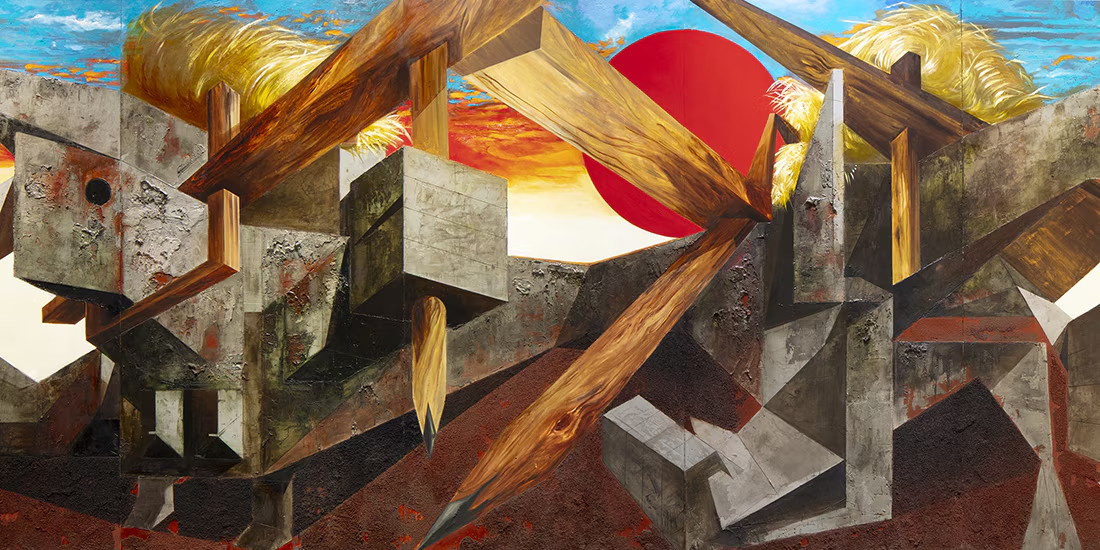
Para esta muestra, Jiménez creó dos piezas en las que la materialidad está claramente asociada a la clase social. Una de ellas es el mural La yunta, de seis metros por dos; hecho con concreto, grava, óleo y dos metales pesados y dañinos: cadmio y cobalto. “El mural representa a dos bestias de carga unidas por una yunta y es un señalamiento irónico a la división entre el trabajo intelectual y el físico. Tiene que ver con los planteamientos de la educación, que puede ser emancipatoria y, al mismo tiempo, opresiva; cómo el trabajo intelectual utiliza al trabajo físico como un peyorativo de la falta de esfuerzo y de capacidades”, explica.
Otra de esas obras es un retrato mortuorio de su padre, un carpintero que al fallecer tenía todavía las manos manchadas del barniz que usaba en los muebles. “Está hecho sobre madera de pino, que es con la que se hacen los ataúdes para las personas comunes; pintado con tres pigmentos: blanco de plomo, lapislázuli y bermellón, colores asociados a la realeza o a los próceres”, detalla.
El retrato se refiere al núcleo de Memoria y se convierte en un “símbolo de un hombre común de clase trabajadora” cuya historia es similar a la de millones de personas en este país: “Una de sus últimas actividades antes de enfermar era barnizar muebles y este retrato de él habla mucho de cómo vamos llevando nuestras vidas en un sistema en el que trabajas hasta el último momento en el que puedes estar lúcido y de pie. Se presenta la muerte y no da tiempo ni siquiera de lavarse las manos”.
For this exhibition, Jiménez created two pieces in which materiality is clearly associated with social class. One of them is the mural "La Yunta" (The Yoke), measuring six by two meters; made with concrete, gravel, oil paint, and two harmful heavy metals: cadmium and cobalt. “The mural represents two beasts of burden joined by a yoke and is an ironic commentary on the division between intellectual and physical labor. It relates to educational approaches, which can be emancipatory and, at the same time, oppressive; how intellectual work uses physical labor as a pejorative term for a lack of effort and ability,” he explains.
Another of these works is a death portrait of his father, a carpenter whose hands were still stained with the varnish he used on furniture when he died. “It’s made on pine wood, which is what coffins for ordinary people are made of; painted with three pigments: lead white, lapis lazuli, and vermilion, colors associated with royalty or national heroes,” he explains.
The portrait refers to the core of Memory and becomes a “symbol of an ordinary working-class man” whose story is similar to that of millions of people in this country: “One of his last activities before falling ill was varnishing furniture, and this portrait of him speaks volumes about how we live our lives in a system where you work until the very last moment you can be lucid and standing. Death arrives, and there isn't even time to wash your hands.”
No items found.