Museo Kaluz showcases Abel Quezada's critical perspective on football
Museo Kaluz muestra la perspectiva crítica de Abel Quezada sobre el futbol
The artist transformed the court into a stage where identity, belonging, and power tensions are at stake; his works question the relationship between sport, politics, economics, and media.
El artista convirtió la cancha en un escenario donde se juegan la identidad, la pertenencia y las tensiones del poder; en sus obras se cuestionan la relación entre deporte, política, economía y medios.
3.7.2026
Leticia Sánchez Medel
Leticia Sánchez Medel
“From a very young age, drawing and humor were for Abel Quezada the most effective ways to share his life experience, the worlds of his imagination, his travels, and his critique of Mexican reality,” recalled Ery Cámara, curator of the exhibition ¡México, México, México! Abel Quezada. Between art and sport.
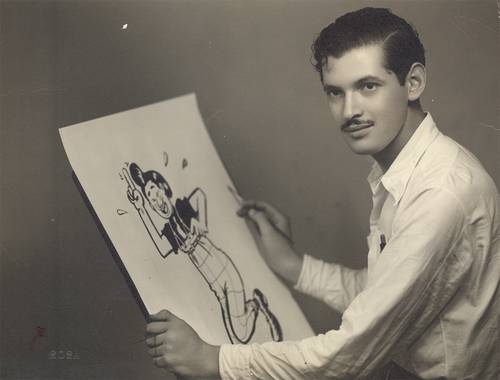
It is an exhibition that brings together cartoons, paintings and archival material to pay homage to one of the most distinctive and memorable voices of Mexican visual journalism : Abel Quezada Alarcón (Monterrey, 1920 - Cuernavaca, 1991).
With the 2026 World Cup on the horizon, the Kaluz Museum presents, through humor, satire and uncompromising criticism, the perspective of Abel Quezada Alarcón, who turned the field into a stage where identity, belonging and the tensions of power are played out.
According to Cámara, the work of Abel Quezada , consisting of cartoons that enlivened newspaper pages such as Esto , Ovaciones , Novedades , Cine Mundial and Excélsior , as well as covers for The New Yorker between 1981 and 1987, remains remarkably current: “What Abel Quezada says continues to mark the times to this day.”
The exhibition is organized into three chapters that trace the trajectory of the outstanding cartoonist, painter, chronicler and keen observer of the national reality: his beginnings as a journalistic cartoonist, his interest in sports in general and, finally, his particular vision on football, Cámara explained.
In addition to viewing Quezada's work, the public will be able to learn about his thinking and creative process: “Humor was my resource. The most important one I could use to communicate with people. I never made a joke. Humor is everywhere except in jokes. Humor is just a means. A touch. A grain of salt in an idea. It is the expression of an idea.”
It is no coincidence that Quezada, in one of his cartoons, questions: “Psychologists ask themselves: What does the Mexican people need to shake off their complexes? And he poses several questions: More education? Administrative honesty? Confidence in their Revolution? Improved food quality? And he concludes that no… What they need is to WIN at soccer.”
The paintings show teams with distinctive uniforms and stadiums transformed by the imagination; in his cartoons, a sarcastic mirror appears in which the passions of the fans and the contradictions of the spectacle are reflected.
“His cartoons, especially the soccer ones, are fantastic; it seems like we could publish them tomorrow,” said Abel Quezada, the artist’s son, who thanked the Kaluz Museum for presenting his father’s work in a clear and complete way.
“It’s a small but very clear and comprehensive exhibition that condenses all of my father’s work. It’s very well explained and arranged. You’ll see the paintings and cartoons in detail, especially the football ones, which are fantastic because we could publish them tomorrow and they would fit perfectly.”
Miguel Ángel Fernández Félix, director of the Kaluz Museum, emphasized that the exhibition not only celebrates Quezada's graphic skill, but also his ability to reflect on public life. “It is a tribute to Abel's speed, his ability to use few strokes and a narrative that invited us to think beyond humor. He was a critical artist who sought to define our identity.”
Fernández Félix also emphasizes the cultural context that influenced the cartoonist from his arrival in Mexico City in 1936 and the importance of showcasing those historical connections today. The satirical cartoons and paintings on display not only document matches and players, but also question the relationship between sports, politics, economics, and the media.
The exhibition invites visitors to see how football acts as a social device, creating a collective identity and a scenario of contradictions, through the eyes of a creator who turned criticism into laughter and memory.
“Thanks to the collaboration with the Quezada Rueda family and private collections, ¡México, México, México! offers a new interpretation of the work of Abel Quezada: an artist who made creative freedom a way to break conventions and challenge solemnity. In his own words, collected in this exhibition, the enduring nature of a vision that continues to speak urgently about our time is revealed.”
In the exhibition notes, Cámara explains that in 1954, Quezada was sent as a reporter to the World Cup in Switzerland , an experience that broadened his perspective on this sport that generates feelings of belonging and collective identity. Through his work, criticism and satire gave life to memorable cartoons about soccer that remain relevant today.
“His paintings depict teams in distinctive uniforms and matches played in urban settings transformed by the imagination, capturing the dynamism of the game and the atmosphere surrounding the athletes. His cartoons, in contrast, function as a mirror that reflects, through humor and irony, the passions of the fans, the persistent chorus of 'yes we can' and the contradictions of the sporting spectacle.”
Cámara explained that Abel Quezada presents football not only as a game, but as a social phenomenon influenced by political, economic, and media interests. These works highlight the importance of an objective perspective that goes beyond the sporting arena to examine the forms of identity, belonging, and power that continue to define this globally influential sport.
“Desde muy joven, el dibujo y el humor fueron para Abel Quezada las formas más efectivas de compartir su experiencia vital, los mundos de su imaginación, sus viajes y su crítica sobre la realidad mexicana”, recordó Ery Cámara, curador de la exposición ¡México, México, México! Abel Quezada. Entre arte y deporte.
Es una muestra que reúne cartones, pinturas y material de archivo para rendir homenaje a una de las voces más distintivas y memorables del periodismo visual mexicano: Abel Quezada Alarcón (Monterrey, 1920 - Cuernavaca, 1991).
Con el Mundial de Futbol 2026 en el horizonte, el Museo Kaluz presenta, a través del humor, la sátira y una crítica sin concesiones, la perspectiva de Abel Quezada Alarcón, quien convirtió la cancha en un escenario donde se juegan la identidad, la pertenencia y las tensiones del poder.
Para Cámara, la obra de Abel Quezada, formada por cartones que animaron páginas de periódicos como Esto, Ovaciones, Novedades, Cine Mundial y Excélsior, además de portadas para The New Yorker entre 1981 y 1987, se mantiene notablemente actual: “Lo que dice Abel Quezada sigue marcando el tiempo hasta hoy”.
La muestra se organiza en tres capítulos que trazan la trayectoria del destacado dibujante, pintor, cronista y observador agudo de la realidad nacional: sus inicios como dibujante periodístico, su interés por el deporte en general y, finalmente, su visión particular sobre el fútbol, detalló Cámara.
Además de ver la obra de Quezada, el público podrá conocer cómo pensaba y creaba: “El humor fue mi recurso. El más importante que podía usar para comunicarme con la gente. Nunca hice un chiste. El humor está en todas partes menos en los chistes. El humor es solo un medio. Un toque. Un grano de sal en una idea. Es la expresión de una idea”.
No es casual que Quezada, en uno de sus cartones, cuestione: “Los psicólogos se preguntan: ¿Qué necesita el pueblo de México para sacudirse sus complejos? Y plantea varias preguntas: ¿Más educación? ¿Honestidad administrativa? ¿Confianza en su Revolución? ¿Mejorar la calidad de sus alimentos? Y llega a la conclusión de que no… Lo que necesita es GANAR en futbol”.
En las pinturas se observan equipos con uniformes distintivos y estadios transformados por la imaginación; en sus caricaturas aparece un espejo sarcástico en el que se reflejan las pasiones de la afición y las contradicciones del espectáculo.
“Sus cartones, especialmente los de futbol, son fantásticos; parece que podríamos publicarlos mañana”, expresó Abel Quezada, hijo del artista, quien agradeció al Museo Kaluz por presentar de forma clara y completa la obra de su padre.
“Es una exposición pequeña pero muy clara y completa que condensa toda la obra de mi padre. Está muy bien explicado y montado. Verán en detalle los cuadros y los cartones, sobre todo los de futbol, que son fantásticos porque podríamos publicarlos mañana y podrían salir perfectamente”.
Miguel Ángel Fernández Félix, director del Museo Kaluz, destacó que la exposición no solo celebra la habilidad gráfica de Quezada, sino su capacidad para reflexionar sobre la vida pública. “Es un homenaje a la rapidez que tenía Abel, con pocos trazos y una narrativa que nos invitaba a pensar más allá del humor. Fue un artista crítico que buscó nuestra identidad”.
Fernández Félix también enfatiza el contexto cultural que influyó en el dibujante desde su llegada a Ciudad de México en 1936 y la importancia de mostrar esas conexiones históricas hoy. Los cartones satíricos y las pinturas exhibidas no solo documentan partidos y jugadores, sino que cuestionan la relación entre deporte, política, economía y medios.
La exposición invita a los visitantes a ver cómo el futbol actúa como un dispositivo social, creando una identidad colectiva y un escenario de contradicciones, a través de los ojos de un creador que convirtió la crítica en risa y memoria.
“Gracias a la colaboración con la familia Quezada Rueda y colecciones privadas, ¡México, México, México! ofrece una nueva interpretación de la obra de Abel Quezada: un artista que hizo de la libertad creativa una manera de romper convenciones y desafiar solemnidades. En sus propias palabras, recogidas en esta muestra, se revela la permanencia de una mirada que sigue diciendo algo urgente sobre nuestro tiempo”.
En la cédula de sala, Cámara explica que, en 1954, Quezada fue enviado como reportero al Mundial de Suiza, experiencia que amplió su perspectiva sobre este deporte que genera sentimientos de pertenencia e identidad colectiva. A través de su obra, la crítica y la sátira dieron vida a memorables cartones sobre el futbol que mantienen su relevancia.
“Sus pinturas muestran equipos con uniformes distintivos y partidos disputados en escenarios urbanos transformados por la imaginación, capturando el dinamismo del juego y la atmósfera que rodea a los deportistas. Sus cartones, en contraste, funcionan como un espejo que refleja, a través del humor y la ironía, las pasiones de la afición, el persistente coro del ‘sí se puede’ y las contradicciones del espectáculo deportivo”.
Cámara detalló que Abel Quezada presenta el futbol no sólo como un juego, sino como un fenómeno social influenciado por intereses políticos, económicos y mediáticos. Estas obras destacan la importancia de una perspectiva objetiva que va más allá del ámbito deportivo para interrogar las formas de identidad, pertenencia y poder que siguen definiendo este deporte de alcance global.
No items found.