Mexico City's Zona Maco to bring together 241 exhibitors next month
La Zona Maco de la Ciudad de México reunirá a 241 expositores el próximo mes
21.1.2026
Story by Maximilíano Durón for msn.com
Texto por Maximilíano Durón para msn.com
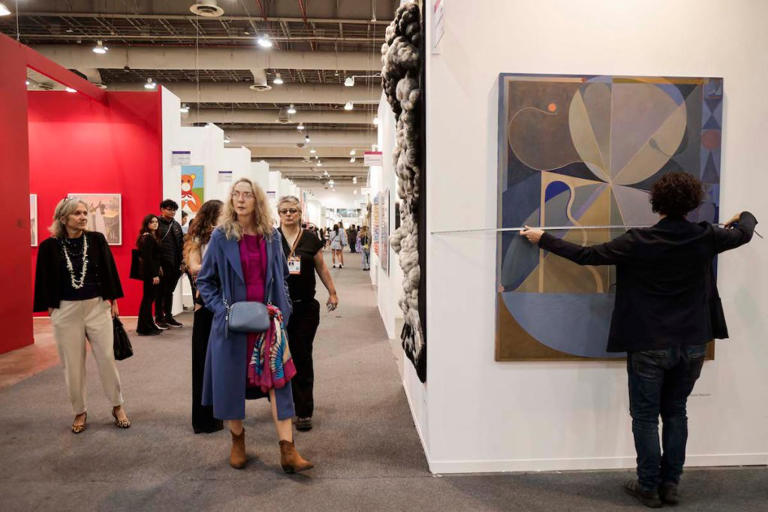
Next month, Zona Maco, one of Latin America's top fairs, will alight in Mexico City, bringing together droves of collectors to Centro Banamex, on the outskirts of the capital city for the fair along will several satellites.
The fair will take place during the same time as the inaugural edition of Art Basel Qatar, but the conflict doesn't seem to have impacted Zona Maco, which said it has 50 museum board groups confirmed to attend during the event running from February 4–8.
The upcoming iteration will bring together 241 exhibitors across nine sections, several of which focus mainly on modern and contemporary art. There are also sections for design, books, and antiquities.
The fair's main section will include 66 exhibitors, such as Pace Gallery, Galleria Continua, Sean Kelly, Mariane Ibrahim, Carl Freedman Gallery, Livia Benavides, and A Lighthouse Called Kanata, alongside some of Mexico's top galleries like Kurimanzutto, OMR, Proyectos Monclova, Labor, Curro, and Galería Karen Huber.
"We're very excited because each year it gets more interesting-you think you've done it all, and then something new happens," Zélika García, the fair's founder, told ARTnews.
One of those new happenings comes in the form of a section called Forma, which will be staged for the first time at the 2026 fair. Located within the larger contemporary art section, Forma will host six galleries, who were invited to participate. They include Carpenters Workshop Gallery, Santiago's Collectio, São Paulo's Dobra, and Amsterdam's Rademakers Gallery.
García said that these galleries didn't quite fit within the contemporary art or design sections, as they often mix both within their respective programs and art-fair booths. "I think it was needed," she said. "We didn't have a special place where to fit in the fair, and now this year we have it. This year, it's six but with time, if this goes well, it can grow a little more."
Another change comes in the design section, which consists of 79 exhibitors and focuses primarily on designers from across Mexico. "Our fair is very different because you see design that you don't see in other fairs, like those in Paris or the US," García said, noting that several of Mexico's top design universities are invited to bring sellable products from their students and its section for emerging designers is aimed at showcasing rising talents without gallery representation or large studios via one single product that has no more than an area of one square meter.
The Diseño Emergente (Emerging Design) section this year will include 48 of the 79 design exhibitors and it will move to a different part of the Centro Banamex and will be organized in a cohesive exhibition, as opposed to separate stands, by the Design section's artistic director, Cecilia León de la Barra, along with Mexican designers Joel Escalona and Jorge Diego Etienne.
The Ejes section, for emerging contemporary artists, will also see its floorplan revised. This year's iteration will be curated by Aimé Iglesias Lukin, the director and chief curator of the Americas Society in New York, for the first time and bring together 35 exhibitors, including Kates-Ferri Projects, Linse, Mesa Pictures, and Murmurs.
The other main curated section, Sur, for artists from the southern hemisphere, will be curated for third and final time by Manuela Moscoso, the executive and artistic director of CARA in New York. The section's 17 galleries include K Contemporary, Galería Patricia Ready, Palo Gallery, and Stems Gallery.
"We change the curators in different sections every two or three years so that the sections are always fresh," García said. "It's important for us to try and be different from other fairs, to keep the mix of very blue-chip galleries with the emerging and mid-career artists at the same time."
For the past few years, the international art market has been on somewhat of a downward turn or correction, which seemed to rebound slightly at the end of last year. García said that the 2025 edition of Zona Maco was a huge success. "We didn't feel that market low. I think it came a little bit later," she said, noting that this year also looks fortuitous as the fair has 50 museum board groups slated to attend the 2026 edition. "I'm very happy with our timing [in February] if things remain the same because we heard from the Miami fairs that the market is up again."
She added, "Mexican collectors have always been very supportive of the fair. I think they like having the most important art fair in Latin America in Mexico, so they support the galleries that come from abroad during Zona Maco. They buy from the Mexican galleries all year, so I think they take special care to buy from international galleries. And the international museum groups like to buy from Mexican galleries because they are in Mexico, so it's a good exchange."
El próximo mes, Zona Maco, una de las ferias más importantes de América Latina, llegará a la Ciudad de México y reunirá a multitudes de coleccionistas en el Centro Banamex, en las afueras de la capital, para la feria junto con varios satélites.
La feria se llevará a cabo al mismo tiempo que la edición inaugural de Art Basel Qatar, pero el conflicto no parece haber afectado a Zona Maco, que dijo que tiene 50 grupos de juntas de museos confirmados para asistir durante el evento que se realizará del 4 al 8 de febrero.
La próxima edición reunirá a 241 expositores en nueve secciones, varias de las cuales se centran principalmente en arte moderno y contemporáneo. También hay secciones de diseño, libros y antigüedades.
La sección principal de la feria incluirá 66 expositores, como Pace Gallery, Galleria Continua, Sean Kelly, Mariane Ibrahim, Carl Freedman Gallery, Livia Benavides y A Lighthouse Called Kanata, junto con algunas de las principales galerías de México como Kurimanzutto, OMR, Proyectos Monclova, Labor, Curro y Galería Karen Huber.
"Estamos muy emocionados porque cada año se pone más interesante, crees que ya lo has hecho todo y de repente sucede algo nuevo", dijo a ARTnews Zélika García, fundadora de la feria .
Una de estas novedades es la sección Forma, que se presentará por primera vez en la feria de 2026. Forma, dentro de la sección de arte contemporáneo, albergará a seis galerías invitadas a participar. Entre ellas se encuentran Carpenters Workshop Gallery, Collectio de Santiago, Dobra de São Paulo y Rademakers Gallery de Ámsterdam.
García comentó que estas galerías no encajaban del todo en las secciones de arte contemporáneo o diseño, ya que suelen mezclar ambas dentro de sus respectivos programas y stands en la feria. "Creo que era necesario", dijo. "No teníamos un espacio específico para integrarlas en la feria, y este año lo tenemos. Este año son seis, pero con el tiempo, si esto va bien, puede crecer un poco más".
Otro cambio se produce en la sección de diseño, que cuenta con 79 expositores y se centra principalmente en diseñadores de todo México. "Nuestra feria es muy diferente porque se ve diseño que no se ve en otras ferias, como las de París o Estados Unidos", comentó García, señalando que varias de las mejores universidades de diseño de México están invitadas a presentar productos comercializables de sus estudiantes, y que su sección para diseñadores emergentes busca mostrar talentos emergentes sin representación en galerías ni grandes estudios, a través de un solo producto de un metro cuadrado.
La sección Diseño Emergente de este año incluirá a 48 de los 79 expositores de diseño y se trasladará a un punto diferente del Centro Banamex y será organizada en una exposición cohesiva, en lugar de stands separados, por la directora artística de la sección de Diseño, Cecilia León de la Barra, junto con los diseñadores mexicanos Joel Escalona y Jorge Diego Etienne .
La sección Ejes, dedicada a artistas contemporáneos emergentes, también verá renovada su distribución. La edición de este año estará comisariada por primera vez por Aimé Iglesias Lukin, directora y curadora principal de la Americas Society en Nueva York, y reunirá a 35 expositores, entre ellos Kates-Ferri Projects, Linse, Mesa Pictures y Murmurs.
La otra sección principal, Sur, para artistas del hemisferio sur, será comisariada por tercera y última vez por Manuela Moscoso, directora ejecutiva y artística de CARA en Nueva York. Las 17 galerías de la sección incluyen K Contemporary, Galería Patricia Ready, Palo Gallery y Stems Gallery.
"Cambiamos los curadores de las diferentes secciones cada dos o tres años para que siempre estén frescas", dijo García. "Para nosotros es importante intentar diferenciarnos de otras ferias, mantener la mezcla de galerías de primera línea con artistas emergentes y de mediana trayectoria al mismo tiempo".
Durante los últimos años, el mercado internacional del arte ha experimentado una especie de recesión o corrección, que pareció recuperarse ligeramente a finales del año pasado. García afirmó que la edición de 2025 de Zona Maco fue un gran éxito. "No percibimos ese bajón del mercado. Creo que llegó un poco más tarde", añadió, señalando que este año también parece ser una buena noticia, ya que la feria cuenta con 50 grupos de juntas directivas de museos programados para asistir a la edición de 2026. "Estoy muy contenta con nuestra fecha [en febrero] si la situación sigue igual, porque las ferias de Miami nos han dicho que el mercado ha vuelto a subir".
Añadió: «Los coleccionistas mexicanos siempre han apoyado mucho la feria. Creo que les gusta tener la feria de arte más importante de Latinoamérica en México, por lo que apoyan a las galerías extranjeras durante la Zona Maco. Compran a las galerías mexicanas todo el año, así que creo que se preocupan especialmente por comprar a las galerías internacionales. Y a los grupos museísticos internacionales les gusta comprar a las galerías mexicanas porque están en México, así que es un buen intercambio».
No items found.