Visual memories of Abel Quezada in Proyectos Monclova: an intimate visit to his imagination
Memorias visuales de Abel Quezada en Proyectos Monclova: una visita íntima a su imaginación
A personal visit to Visual Memories, the exhibition of Abel Quezada at Proyectos Monclova, where sports, travel and urban landscapes reveal the lesser-known side of the celebrated Mexican cartoonist.
Una visita personal a Memorias visuales, la exposición de Abel Quezada en Proyectos Monclova, donde deportes, viajes y paisajes urbanos revelan el lado menos conocido del célebre cartonista mexicano.
12.11.2025
By: Estefanía Fink
Por: Estefanía Fink
I don't know why, but I thought an Abel Quezada exhibition was going to be pure political wit, pure biting satire. But no. From the first room, you sense something else entirely: like stepping into the dark side of someone you thought you already knew. Entering Visual Memories at Proyectos Monclova is like opening a side door into his mind, the part he nurtured on Sundays while painting.
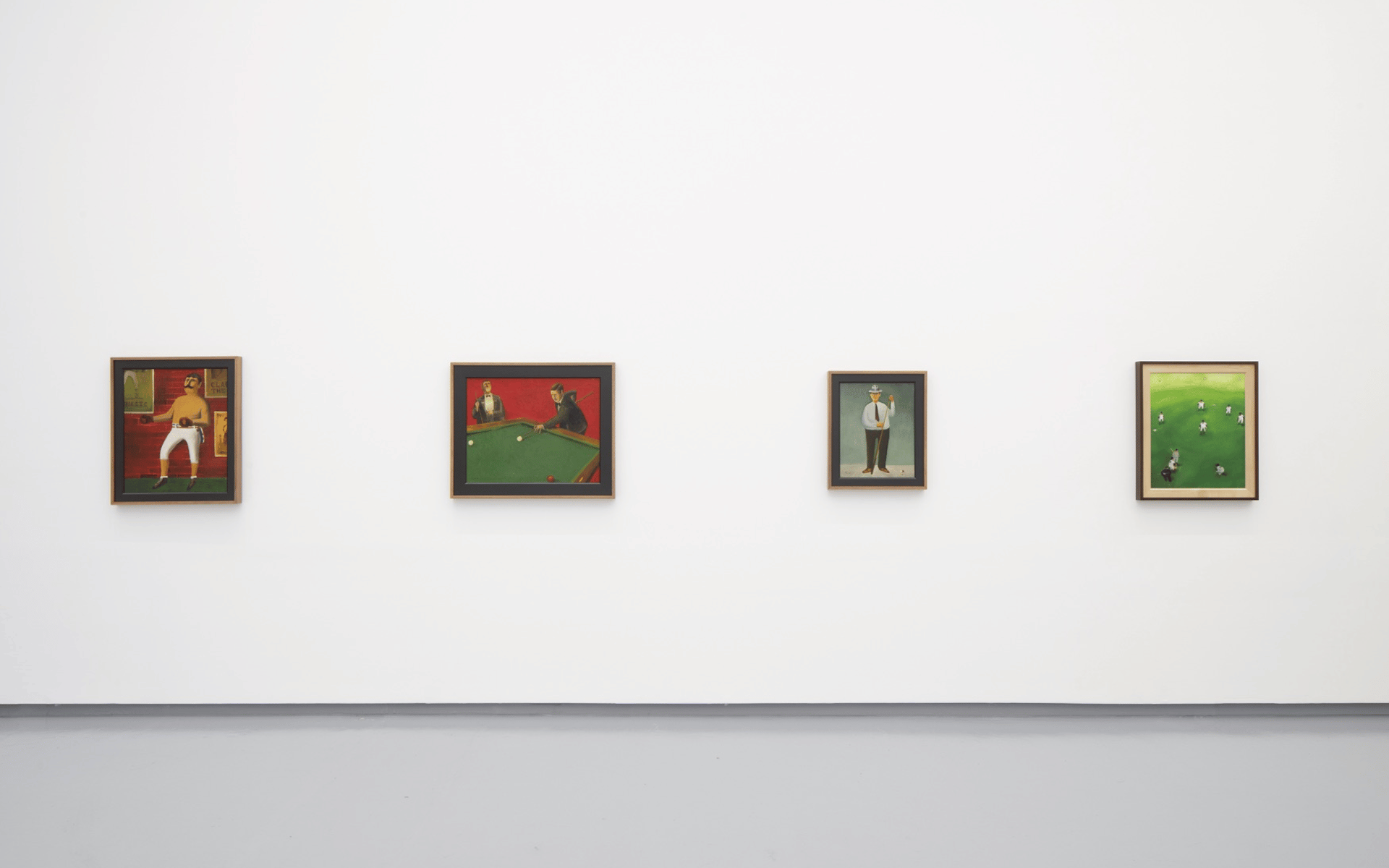
The exhibition is organized around three themes: sports, travel, and landscapes, but the experience feels more like looking through the notebook of someone who observed the world with quiet attention. In the first room, I stopped in front of a painting of a soccer player. It has that chaotic energy of the game, but with the impeccable order of someone who studied every movement. Then I saw the boxer John L. Sullivan, reinterpreted from the iconic pose of an old photograph. Quezada gives it weight, expression, something almost solemn… and of course, a touch of humor that he never completely abandons.
Then came the travel section. And I lingered on this for quite a while. There's a watercolor of Mexicans on the Oriental Express that seems to have been captured in a moment you weren't invited to witness. Elegant people, familiar faces (or faces that could be), all looking at something off-screen. And then there's the taxi in London, enveloped in a fog so thick you can almost feel the cold. It gave me that feeling you get when you're traveling and you're just beginning to understand where you are.
But what surprised me most were the tapestries. I'd never thought of Quezada as someone who would end up working with tapestries, but here they are: scenes from a very long trip in 1973. Canada, England, Belgium, France, the USSR, China… and all filtered through sketches, notes, and Polaroids. Up close you can see the threads, the textures, and you understand that this man saw and recorded absolutely everything.
The last room features cityscapes. In Self-Portrait in a City with a River, I felt that strange sensation of seeing a self-portrait without his face appearing. It's him, but it's also the city, the traffic, the buildings, the river split in two. As if his identity were that map.
I left with that small but intense feeling of having met someone new even though that person isn't alive. And above all, with the idea that Quezada, beyond the humor everyone celebrates, had an infinite curiosity about what happens when no one is watching. And it's precisely that aspect—the gaze that pauses before judging—that Proyectos Monclova allows to breathe here.
The exhibition will be open from November 8 to December 20, 2025. It's worth taking your time to see it.
@_monclova
Lamartine 415, Polanco
No sé por qué, pero pensé que una exposición de Abel Quezada iba a ser puro ingenio político, pura línea ácida. Y no. Desde la primera sala se siente otra cosa: como si entraras al lado B de alguien que ya creías conocer. Entrar a Memorias visuales en Proyectos Monclova es como abrir una puerta lateral a su mente, la parte que él alimentaba los domingos mientras pintaba.
La muestra está organizada en tres ejes: deportes, viajes y paisajes, pero el recorrido se siente más como mirar un cuaderno de alguien que observaba el mundo con atención silenciosa. En la primera sala me detuve frente a un cuadro de fútbol. Tiene esa energía caótica del juego, pero con el orden impecable de alguien que estudió cada movimiento. Luego vi al boxeador John L. Sullivan, reinterpretado desde la postura icónica de una fotografía antigua. Quezada le da peso, gesto, algo casi solemne… y claro, un toque del humor que jamás abandona del todo.
Después, la parte de los viajes. Y aquí sí me quedé un rato largo. Hay una acuarela de mexicanos en el Oriental Express que parece sacada de un momento que no estabas invitado a ver. Personas elegantes, caras conocidas (o que podrían serlo), todos mirando algo fuera de cuadro. Y luego está el taxi en Londres, envuelto en una neblina tan densa que casi puedes sentir el frío. Me dio esa sensación de cuando viajas y apenas empiezas a entender dónde estás.
Pero lo que más me sorprendió fueron los gobelinos. Nunca había pensado en Quezada como alguien que acabaría en tapices, pero aquí están: escenas de un viaje larguísimo en 1973. Canadá, Inglaterra, Bélgica, Francia, la URSS, China… y todo filtrado por apuntes, notas y Polaroids. De cerca ves los hilos, las texturas, y entiendes que este hombre veía y registraba absolutamente todo.
La última sala tiene paisajes urbanos. En Autorretrato en una ciudad con río sentí esa cosa rara de ver un autorretrato sin que aparezca la cara. Es él, pero también es la ciudad, el tráfico, los edificios, el río partido en dos. Como si su identidad fuera ese mapa.
Salí con esa sensación chiquita pero intensa de haber conocido a alguien nuevo sin que esa persona esté viva. Y sobre todo con la idea de que Quezada, más allá del humor que todos le celebran, tenía una curiosidad infinita por lo que pasa cuando nadie está mirando. Y es justo esa parte —la mirada que se detiene antes de opinar— la que Proyectos Monclova deja respirar aquí.
La exposición estará abierta del 8 de noviembre al 20 de diciembre de 2025. Vale la pena verla con calma.
@_monclova
Lamartine 415, Polanco
No items found.