Laboratorio Arte Alameda presents a new exhibition cycle that explores memory and the residual
Laboratorio Arte Alameda presenta nuevo ciclo expositivo que explora la memoria y lo residual
The Laboratorio Arte Alameda reopens with a new exhibition cycle led by Pablo Rasgado, TRES and Josué Mejía, where memory, waste and the history of the building itself become the subject of artistic research.
El Laboratorio Arte Alameda reabre con un nuevo ciclo expositivo encabezado por Pablo Rasgado, TRES y Josué Mejía, donde la memoria, los residuos y la historia del propio edificio se convierten en materia de investigación artística.
22.6.2026
Estefanía Fink
Estefanía Fink
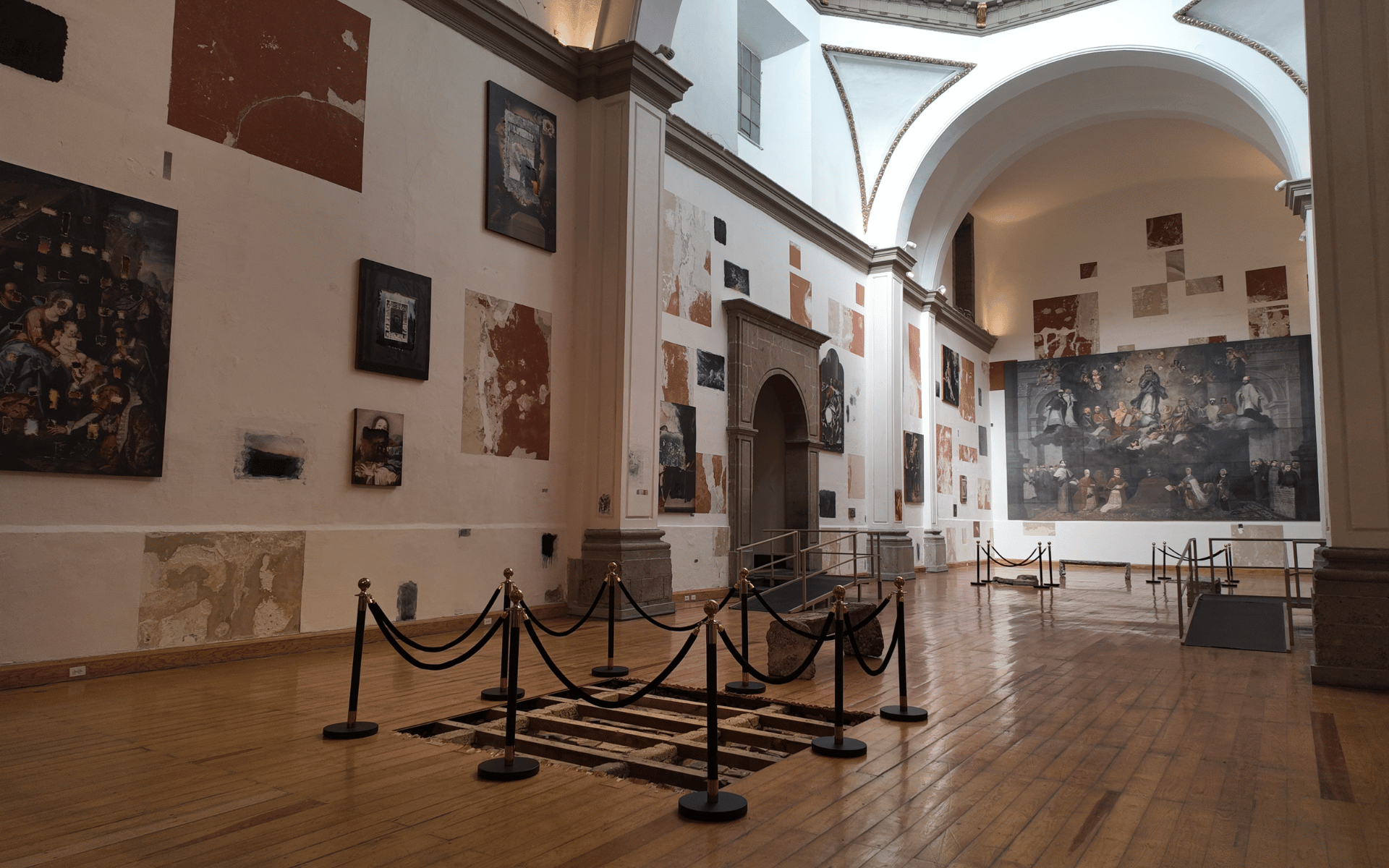
Some buildings are never truly finished. They change function, accumulate layers, conceal scars, and preserve traces of different eras that coexist in the same space. The former Convent of San Diego, founded in the 16th century, later converted into the Viceroyalty Art Gallery, and now home to the Laboratorio Arte Alameda, is one such example. The building has witnessed diverse ways of understanding history, art, and the city.
After a period of closure dedicated to the comprehensive restoration of its architecture and central nave, the Laboratorio Arte Alameda reopens its doors with an exhibition series that understands the building as a living archive. A space where memory is presented as a series of material layers, vestiges, and tensions that continue to operate in the present.
The exhibitions Pentimento , by Pablo Rasgado; Estado sustentado , by the TRES collective; and Fábulas para dormir , by Josué Mejía, share the same concern: how is collective memory constructed and what objects, images or waste participate in that construction?
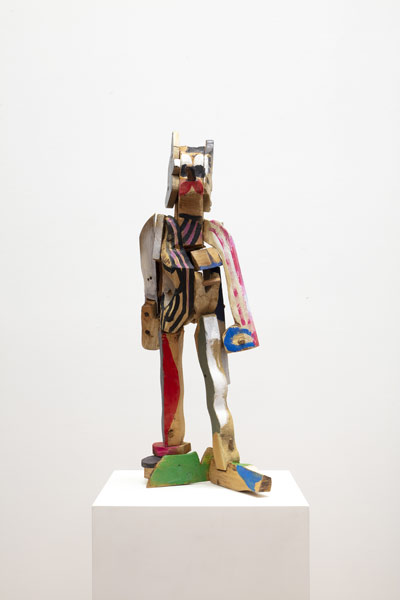
Meanwhile, Estado Colgante (Suspended State ), by the TRES collective—comprised of Ilana Boltvinik and Rodrigo Viñas—approaches what is normally left out of the official narrative: waste. The exhibition stems from an investigation of materials and remains from the theater of the Palace of Fine Arts, asking what stories remain hidden in what an institution decides to discard. More than an exhibition of abandoned objects, it is a reflection on the capacity of matter to store social, economic, and emotional memory.
The third exhibition, Bedtime Fables , by Josué Mejía, critically examines the national imaginaries constructed during the 20th century. Using educational materials produced by the Ministry of Public Education between 1938 and 1940, the artist questions the narratives through which we learned to imagine the nation. The dialogue with the mural The Informants of Sahagún , located within the same venue, raises questions about who writes history and what other versions can still be imagined.
The new cycle of the Laboratorio Arte Alameda functions as an open investigation into the persistence of images, the fragility of official narratives, and the way in which spaces continue to transform even when they seem immobile.
Laboratorio Arte Alameda
Until October 18, 2026
Tuesday to Sunday, from 9:00 a.m. to 5:00 p.m.
Dr. Mora 7, Historic Center
Algunos edificios no terminan nunca de construirse. Cambian de función, acumulan capas, esconden cicatrices y conservan rastros de épocas distintas que conviven en un mismo espacio. El antiguo Convento de San Diego, fundado en el siglo XVI, convertido posteriormente en Pinacoteca Virreinal y hoy sede del Laboratorio Arte Alameda es uno de ellos, el recinto ha sido testigo de distintas maneras de entender la historia, el arte y la ciudad.
Después de un periodo de cierre dedicado a la restauración integral de su arquitectura y nave central, el Laboratorio Arte Alameda reabre sus puertas con un ciclo expositivo que entiende al edificio como un archivo vivo. Un espacio donde la memoria se presenta como una serie de capas materiales, vestigios y tensiones que siguen operando en el presente.
Las exposiciones Pentimento, de Pablo Rasgado; Estado suspendido, del colectivo TRES; y Fábulas para dormir, de Josué Mejía, comparten una misma inquietud: ¿cómo se construye la memoria colectiva y qué objetos, imágenes o residuos participan en esa construcción?
En Pentimento, Pablo Rasgado realiza una suerte de arqueología especulativa a partir del proceso mismo de restauración del recinto. Durante meses observó el edificio desde sus entrañas, sus aplanados, grietas, capas de pintura y transformaciones históricas. El resultado es una intervención de sitio específico que convierte la arquitectura en una excavación abierta, donde cada fragmento revela algo sobre las vidas anteriores del espacio.
Por su parte, Estado suspendido, del colectivo TRES —integrado por Ilana Boltvinik y Rodrigo Viñas—, se aproxima a aquello que normalmente queda fuera del relato oficial, los residuos. La exposición parte de una investigación sobre materiales y restos provenientes del teatro del Palacio de Bellas Artes para preguntarse qué historias permanecen ocultas en aquello que una institución decide desechar. Más que una exposición sobre objetos abandonados, se trata de una reflexión sobre la capacidad de la materia para almacenar memoria social, económica y afectiva.
La tercera exposición, Fábulas para dormir, de Josué Mejía, revisa críticamente los imaginarios nacionales construidos durante el siglo XX. A partir de materiales educativos producidos por la Secretaría de Educación Pública entre 1938 y 1940, el artista pone en cuestión las narrativas con las que aprendimos a imaginar la nación. El diálogo con el mural Los Informantes de Sahagún, ubicado dentro del propio recinto, abre preguntas sobre quién escribe la historia y qué otras versiones pueden todavía imaginarse.
El nuevo ciclo del Laboratorio Arte Alameda funciona como una investigación abierta sobre la persistencia de las imágenes, la fragilidad de las narrativas oficiales y la manera en que los espacios continúan transformándose incluso cuando parecen inmóviles.
Laboratorio Arte Alameda
Hasta el 18 de octubre de 2026
Martes a domingo, de 9:00 a 17:00 hrs
Dr. Mora 7, Centro Histórico
No items found.