The Route of Friendship: the union between art, sport and brotherhood between nations
La Ruta de la Amistad: la unión entre el arte, el deporte y la hermandad entre naciones
The Route of Friendship is considered one of the most important public and collective art projects of the 20th century in Mexico.
La Ruta de la Amistad es considerada uno de los proyectos de arte público y colectivo más importantes del siglo XX en México.
11.6.2026
Samuel Rodríguez
Samuel Rodríguez
Are you familiar with the Friendship Route ? The Olympic Games have always been events of great global significance due to the unity and sporting and cultural fraternity experienced during this grand event. Many countries have had the privilege of organizing and hosting the Olympic Games throughout history, such as Mexico in 1968, the first Latin American country to host the Olympics.
The Olympics in Mexico are among the most memorable thanks to their iconic graphic design by Lance Wyman and the famous Friendship Route, about which we tell you everything you need to know .
The story behind the monument
Fifty-two years ago, the Games of the XIX Olympiad were inaugurated amidst a historical and national crisis; on the one hand, the racist policies of South Africa, which resulted in the decision by the International Olympic Committee to withdraw the invitation to that country; on the other hand, just 10 days before, one of the bloodiest chapters of our modern history had taken place in the Plaza de las Tres Culturas in Tlatelolco .
One of the fundamental principles of Olympism proclaims that “every person should have the opportunity to practice sport without discrimination of any kind and within the Olympic spirit, which demands mutual understanding, a spirit of friendship, solidarity, and fair play.” It is precisely this spirit of friendship that led the Organizing Committee of the Games of the XIX Olympiad (COO) to organize a Cultural Olympiad , proposed by the artist Mathias Goeritz to the president of the COO, Pedro Ramírez Vázquez, and coordinated by the architect Ruth Rivera , daughter of the famous muralist Diego Rivera.
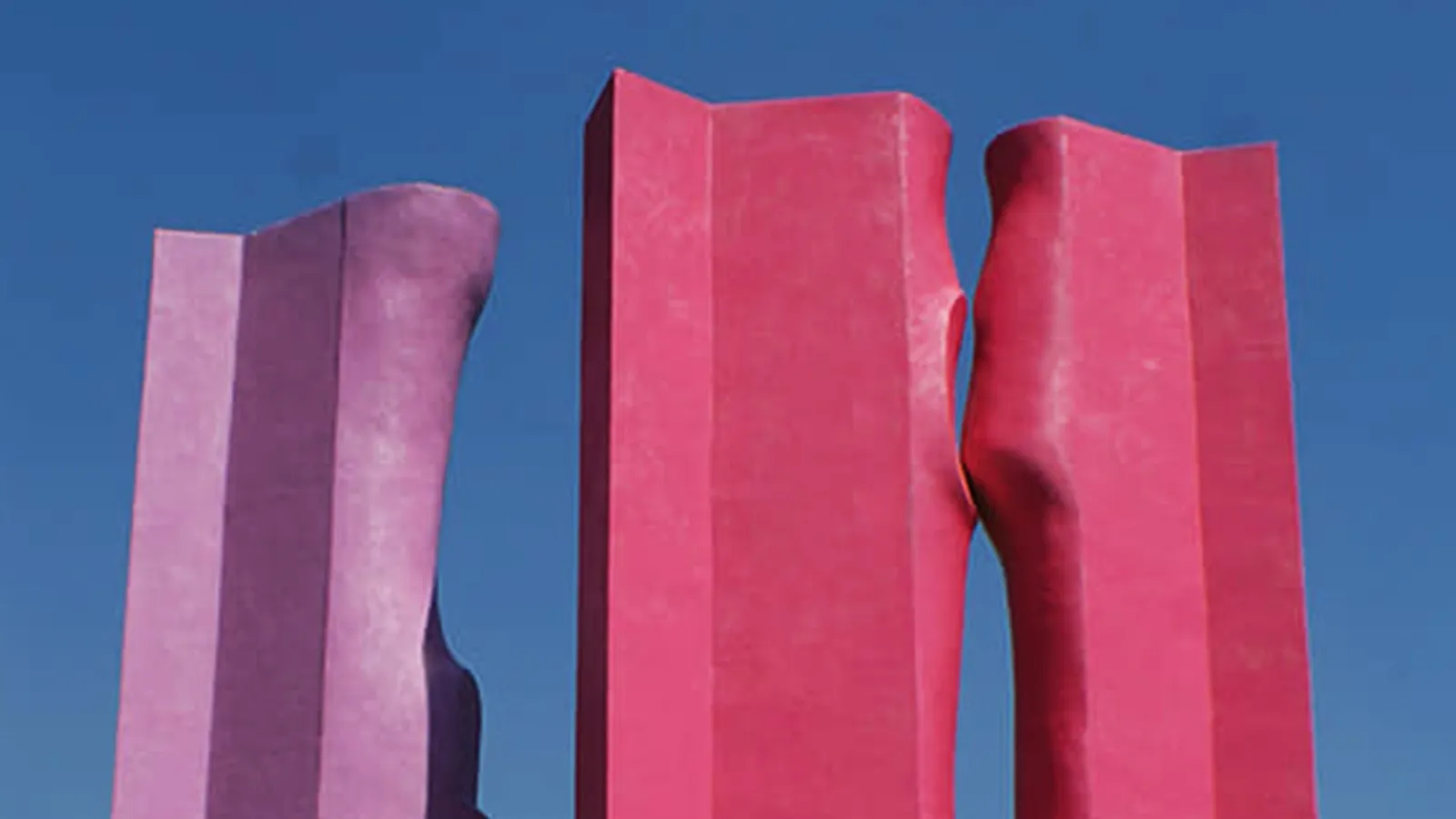
An essential part of the Cultural Olympiad was the construction of the Friendship Route , a trail featuring various monumental sculptures placed along the city's main avenues. Its purpose, in Goeritz's words, was "to bring together sculptors from every continent, of every race, and of every belief and ideology. This gathering could acquire an idealistic and humanistic nature that transcended aesthetics ." The unifying theme, he explained, had to be brotherhood and friendship , where all religious, political, racial, and ideological tendencies would be represented, with whatever force each sculptor wished to give them.
To begin this project, three conditions were stipulated that each of the artists had to meet: the first, “they had to be monumental sculptures that contributed to improving the urban environment”; the second, “they would be discussed collectively, always keeping in mind plastic solutions related to the city”; finally, “concrete would be the mandatory material”.
Furthermore, to modernize the concept of classical public art , which is typically admired on foot, one of the main premises was that the works should reflect the speed at which modern humans move, typically exceeding 70 kilometers per hour in automobiles. Thus, the final 18 sculptures were placed along the Periférico Ring Road, the thoroughfare connecting several Olympic venues: the Mexico City Stadium, the Olympic Village, and the Olympic University Stadium .
What are the sculptures like?
Nineteen sculptures , ranging in height from 5.70 to 18 meters, were constructed as part of the Friendship Route , and three more by guest artists were added, located near the sports venues. The national artists were selected by a small artistic committee comprised of an art critic, an architect, and a representative from the National Institute of Fine Arts, who chose Helen Escobedo, Ángela Gurría, and Jorge Dubón.
In this way, in consecutive order, the sculptures were located by “stations” :
- Signs or The Horseshoe by Angela Gurría, Mexico
- Willy Guttman's anchor , Switzerland
- The Three Graces by Miroslav Chlupac, Czechoslovakia
- Spheres or Sun by Kioshi Takahashi, Japan
- The bipedal sun by Pierre Székely, Hungary
- The Tower of Winds by Gonzalo Fonseca, Uruguay
- Man of Peace by Constantine Nivola, Italy
- Solar disk by Jacques Moeschal, Belgium
- Todd Williams's The Magic Wheel , United States
- Reloj solar de Grzegorz Kowalski, Polonia
- Mexico by José María Subirachs, Spain
- Janus of Clement Meadmore, Australia
- Herbert Bayer's articulated wall , Austria
- Gathering of giants by Joop J. Beljon, Netherlands
- Itzhak Danziger's Gate of Peace , Israel
- Anonymous from Oliver Seguin, France
- African charamusca by Mohamed Melehi, Morocco
- Door to the Wind by Helen Escobedo, Mexico
- Anonymous by Jorge Dubón, Mexico
On the main esplanade of the Mexico City Stadium, the American artist Alexander Calder built the work The Red Sun ; next to the Sports Palace, a work by Félix Candela , Antonio Peyri and Enrique Castañeda Tamborell, Mathias Goeritz placed the work The Big Dipper ; and finally, inserted in the volcanic rock of University City and near the Olympic University Stadium , the work Man Running by German Cueto.
Without a doubt, the Route of Friendship is one of the most important artistic and cultural landmarks of the second half of the 20th century in Mexico. “The Route of Friendship,” explains Laura Ibarra, “as a collective art project integrated into the urban landscape, garnered both praise and criticism, but no one can deny that it succeeded in giving the south of the city distinctive features that became increasingly important to its inhabitants.”
¿Conoces la Ruta de la Amistad? Los Juegos Olímpicos siempre han sido eventos de gran trascendencia mundial debido a la unión y la fraternidad deportiva y cultural que se vive durante este magno acontecimiento. Han sido muchos los países que han tenido la fortuna de organizar y celebrar unos Juegos Olímpicos a lo largo de su historia, tal es el caso de México en 1968, el primer país latinoamericano en ser sede de las Olimpiadas.
Las olimpiadas en México son de las más recordadas gracias a su icónico diseño gráfico por parte de Lance Wyman y a la famosa Ruta de la Amistad, de la cual te contamos todo lo que debes saber al respecto.
La historia detrás del monumento
Hace 52 años se inauguraban los Juegos de la XIX Olimpiada, en medio de un contexto —histórico y nacional— en crisis; por un lado, las políticas racistas por parte de Sudáfrica, que resultaron en la decisión, por parte del Comité Olímpico Internacional, de retirar la invitación a dicho país; por el otro, apenas hace 10 días que había sucedido uno de los capítulos más sangrientos de nuestra historia moderna en la Plaza de las Tres Culturas en Tlatelolco.
Uno de los principios fundamentales del olimpismo exclama que “toda persona debe tener la posibilidad de practicar deporte sin discriminación de ningún tipo y dentro del espíritu olímpico, que exige comprensión mutua, espíritu de amistad, solidaridad y juego limpio”. Es precisamente este espíritu de amistad que llevó a la organización, por parte del Comité Organizador de los Juegos de la XIX Olimpiada (COO), de una Olimpiada Cultural propuesta por el artista Mathias Goeritz al presidente del COO, Pedro Ramírez Vázquez y coordinada por la arquitecta Ruth Rivera, hija del famoso muralista Diego Rivera.
Parte esencial de la Olimpiada Cultural era la construcción de La Ruta de la Amistad, un recorrido por distintas esculturas monumentales, dispuestas en las principales avenidas de la ciudad, con el fin de, en palabras de Goeritz, “reunir a escultores de todos los continentes, de todas las razas, de cualquier creencia e ideología. Esta reunión podría adquirir una naturaleza idealista y humanista que trascendiera la estética”. En el cual “el tema unificador tenía que ser la hermandad, la amistad, donde quedarán representadas todas las tendencias religiosas, políticas, raciales e ideológicas, con la fuerza que cada escultor quisiera darle”.
Para dar comienzo a este proyecto se estipularon tres condiciones que cada uno de los artistas debía cumplir: la primera, “debían ser esculturas monumentales que contribuyeran a mejorar el entorno urbano”; la segunda, “serían discutidas de manera colectiva teniendo siempre en mente soluciones plásticas relacionadas con la ciudad”; por último, “el concreto sería el material obligatorio”.
Asimismo, para modernizar la idea del arte público clásico, el cual se admira a pie, una de las premisas principales era que las obras debían obedecer la velocidad a la cual se movía el ser humano moderno, en automóvil y a más de 70 kilómetros por hora. Es así que las 18 esculturas finales se colocaron a lo largo del Anillo Periférico, la vialidad que une a algunos de los recintos olímpicos: el Estadio Ciudad de México, la Villa Olímpica y el Estadio Olímpico Universitario.
¿Cómo son las esculturas?
Fueron construidas 19 esculturas, con alturas desde los 5.70 hasta los 18 metros de altura, como parte de la Ruta de la Amistad y se agregaron otras tres de artistas invitados, emplazadas en las inmediaciones de los recintos deportivos. Los artistas nacionales fueron elegidos a través de un pequeño comité artístico conformado por un crítico de arte, un arquitecto y un representante del Instituto Nacional de Bellas Artes, los cuales eligieron a Helen Escobedo, Ángela Gurría y Jorge Dubón.
De esta forma, en orden consecutivo, las esculturas se ubicaban por “estaciones”:
- Señales o La herradura de Ángela Gurría, México
- El ancla de Willy Guttman, Suiza
- Las tres gracias de Miroslav Chlupac, Checoslovaquia
- Esferas o Sol de Kioshi Takahashi, Japón
- El sol bípedo de Pierre Székely, Hungría
- La torre de los vientos de Gonzalo Fonseca, Uruguay
- Hombre de paz de Constantino Nivola, Italia
- Disco solar de Jacques Moeschal, Bélgica
- La rueda mágica de Todd Williams, Estados Unidos
- Reloj solar de Grzegorz Kowalski, Polonia
- México de José María Subirachs, España
- Jano de Clement Meadmore, Australia
- Muro articulado de Herbert Bayer, Austria
- Tertulia de gigantes de Joop J. Beljon, Países Bajos
- Puerta de paz de Itzhak Danziger, Israel
- Anónimo de Oliver Seguin, Francia
- Charamusca africana de Mohamed Melehi, Marruecos
- Puerta al viento de Helen Escobedo, México
- Anónimo de Jorge Dubón, México
En la explanada principal del Estadio Ciudad de México, el artista estadounidense Alexander Calder construyó la obra El sol rojo; a un costado del Palacio de los Deportes, obra de Félix Candela, Antonio Peyri y Enrique Castañeda Tamborell, Mathias Goeritz emplazó la obra La Osa Mayor; y por último, inserta en la piedra volcánica de Ciudad Universitaria y cercana al Estadio Olímpico Universitario, la obra Hombre corriendo de German Cueto.
Sin duda, la Ruta de la Amistad, es uno de los pasajes artísticos y culturales más importantes de la segunda mitad del siglo XX en México. “La Ruta de la Amistad —expresa Laura Ibarra— como proyecto de arte colectivo integrado al paisaje urbano, cosechó elogios y críticas, pero nadie puede negar que se logró dotar al sur de la ciudad de distintivos que fueron adquiriendo importancia para sus habitantes”.
No items found.