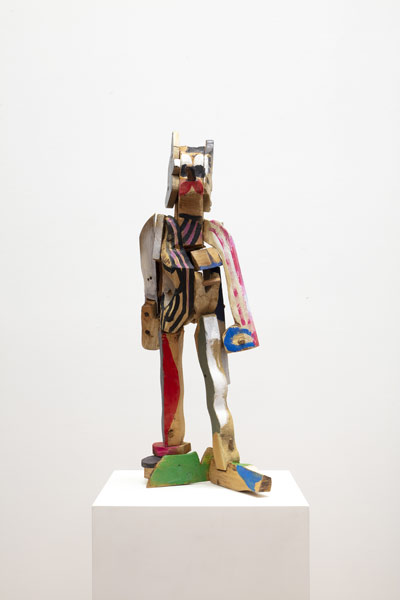
The FEMSA Collection turns 50 and celebrates with an exhibition at MARCO
La Colección FEMSA cumple 50 años y lo celebra con exposición en el MARCO
The exhibition 'Constellations and drifts: art from Latin America from the FEMSA Collection' brings together 174 works by more than 100 Latin American artists.
La exposición ‘Constelaciones y derivas: arte de América Latina desde la Colección FEMSA’, reúne 174 obras de más de 100 artistas de América Latina.
22.3.2026
Redaction Aristegui Noticias for Dossier Politico online
Redacción Aristegui Noticias para Dossier Politico online
As part of its 50th anniversary, the FEMSA Collection presents the exhibition Constellations and Drifts: Latin American Art from the FEMSA Collection , which proposes a new reading of one of the most relevant collections of Latin American art of the 20th and 21st centuries.
With 174 works by more than 100 Latin American artists , the exhibition offers the most comprehensive presentation of the collection ever held in Mexico, while also opening a window into the future of the collection.
Far from being organized as a chronological journey, Constellations and Drifts proposes a curatorial structure based on constellations, which allows establishing relationships between works from different eras, geographies and generations based on shared questions.
“The constellation model allows us to understand that there isn’t just one history of Latin American art,” explains Beto Díaz Suárez , curator of the FEMSA Collection. “Rather, it’s a network of connections that can be continually reconfigured, generating new interpretations among artists working from different contexts and times.”
The exhibition, curated by Eugenia Braniff , Paulina Bravo , Beto Díaz Suárez, curators of the FEMSA Collection; and Adriana Melchor , independent curator, is structured around five constellations or lines of research: Territories, Colonial Structures, Debating Abstraction: Geometry and Form in Latin America, Alchemy and Identities, which reflect the lines that currently guide the development of the collection.
For Paulina Bravo, chief curator of the FEMSA Collection, this approach allows for a revisiting of the collection from a contemporary perspective . “More than presenting a historical overview, we are interested in showing how the questions that permeate Latin American art continue to resonate in the present. By placing emblematic works of modern art in dialogue with contemporary artists, the exhibition opens up new ways of engaging with the collection.”
The exhibition brings together works by key figures in Latin American art, including Jesús Rafael Soto, Rufino Tamayo, María Izquierdo, Diego Rivera, Joaquín Torres-García, Fanny Sanín, Helen Escobedo and Gego , along with recent acquisitions and contemporary artists whose practices broaden the perspectives of the collection.
“Constellations allow us to connect works that historically haven’t been viewed together,” says Eugenia Braniff, associate curator and advisor to the FEMSA Collection. “This exercise allows us to look at the collection from the present and project how we want to continue building it into the future.”
En el marco de su 50 aniversario, la Colección FEMSA presenta la exposición Constelaciones y derivas: arte de América Latina desde la Colección FEMSA, que propone una nueva lectura de uno de los acervos más relevantes de arte latinoamericano de los siglos XX y XXI.
Con 174 obras de más de 100 artistas latinoamericanos, la muestra ofrece la presentación más amplia del acervo realizada en México hasta ahora, al tiempo que abre una ventana hacia el futuro de la colección.
Lejos de organizarse como un recorrido cronológico, Constelaciones y derivas propone una estructura curatorial basada en constelaciones, que permite establecer relaciones entre obras de distintas épocas, geografías y generaciones a partir de preguntas compartidas.
“El modelo de constelaciones nos permite entender que no existe una sola historia del arte latinoamericano”, explica Beto Díaz Suárez, curador de la Colección FEMSA. “Más bien se trata de una red de conexiones que se pueden reconfigurar continuamente, generando nuevas lecturas entre artistas que trabajan desde contextos y momentos distintos”.
La exposición, curada por Eugenia Braniff, Paulina Bravo, Beto Díaz Suárez, curadores de Colección FEMSA; y Adriana Melchor, curadora independiente, se articula a partir de cinco constelaciones o líneas de investigación: Territorios, Estructuras coloniales, Debatiendo la abstracción: geometría y forma en América Latina, Alquimia e Identidades, las cuales reflejan las líneas que actualmente orientan el desarrollo del acervo.
Para Paulina Bravo, curadora en jefe de la Colección FEMSA, esta aproximación permite revisitar el acervo desde una perspectiva contemporánea. “Más que presentar una revisión histórica, nos interesa mostrar cómo las preguntas que atraviesan el arte latinoamericano continúan resonando en el presente. Al poner en diálogo obras emblemáticas del arte moderno con artistas contemporáneos, la exposición abre nuevas formas de aproximarse a la colección”.
El montaje reúne obras de figuras clave del arte latinoamericano, entre ellas Jesús Rafael Soto, Rufino Tamayo, María Izquierdo, Diego Rivera, Joaquín Torres-García, Fanny Sanín, Helen Escobedo y Gego, junto con adquisiciones recientes y artistas contemporáneos cuyas prácticas amplían las perspectivas del acervo.
“Las constelaciones permiten relacionar obras que históricamente no se habían leído juntas”, señala Eugenia Braniff, curadora asociada y consejera de la Colección FEMSA. “Ese ejercicio nos permite mirar la colección desde el presente y proyectar cómo queremos seguir construyendo hacia el futuro”.
No items found.