Football As A Mirror Of Society In The Work Of Abel Quezada
El futbol como un espejo de la sociedad en la obra de Abel Quezada
Through 82 works, the Kaluz Museum examines the artist's relationship with sports and how his humor, caricature, and painting portrayed the passions, contradictions, and identity of Mexicans.
A través de 82 obras, el Museo Kaluz revisa la relación del artista con el deporte y cómo su humor, su caricatura y su pintura retrataron las pasiones, contradicciones e identidad de los mexicanos
7.7.2026
Azaneth Cruz
Azaneth Cruz
“Abel Quezada wasn’t much of a soccer fan, to be honest, between you and me, he liked baseball more. It’s a paradox considering that it was precisely soccer that inspired some of his sharpest criticisms,” confesses Abel Quezada Rueda when talking about his father.
This facet is dedicated to “Mexico-Mexico-Mexico! Abel Quezada between art and sport”, an exhibition that the Kaluz Museum inaugurated on July 4 and keeps open until August 31, in the context of the World Cup.
"My father was from the north of the country, where baseball was very strong, but soccer was an important subject of reflection for him," explains Quezada Rueda, who shares that the exhibition proposes to review the work of the artist as a draftsman, self-taught painter, journalist and chronicler from a perspective in which sport is understood as spectacle, identity and social phenomenon.
The exhibition, he says, brings together 82 pieces including cardboards, paintings, watercolors and archival materials, from the Quezada Rueda Family Collection, the Kaluz Museum, the Monclova Projects Gallery and private collections.
“What Abel Quezada says continues to mark time to this day,” says curator Ery Camara, who indicates that the tour is divided into three sections that show the evolution of the artist and, at the same time, question the relevance of his critical view of the country.
“In the first section, 'The Many Faces of Abel Quezada,' the artist's career is reconstructed through photographs, travel journals, documents, and early drawings that show how he used humor as a tool to interpret Mexican reality,” he says.
He adds: “The section also includes the covers he created for The New Yorker between 1981 and 1987, as well as iconic characters such as Solovino, Don Gastón Billetes and El Tapado.”
The second room, titled “The Game: Between Art and Sport,” brings together the pictorial production that began in 1965, where jockeys, runners, boxers, tennis players, and baseball players “reveal a spontaneous plastic language, detached from academic conventions, fueled by memories of his adolescence in Comales, Tamaulipas, and by figures such as the baseball player
Fernando Valenzuela and the boxer Kid González, important figures in the sport for Quezada.”
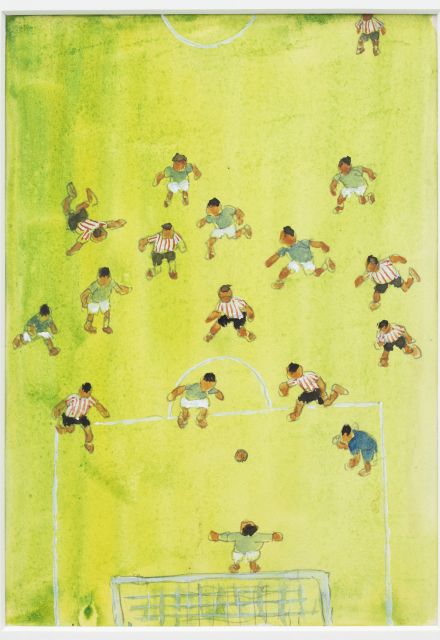
Finally, there is the section “Criticism and Humor on the Field,” where, according to Camara, the exhibition reaches its most revealing moment.
“After covering the 1954 World Cup in Switzerland as a reporter, Quezada turned soccer into a privileged stage for observing the contradictions of Mexican society,” he explains.
Among the works, "The Screaming Festival" stands out, where death appears in front of a packed stadium while declaring "Fill every gap in your life with sports."
“In these works, the artist asks what Mexico needs to overcome its complexes, after proposing options such as better education, greater administrative honesty, or adequate nutrition,” the curator reflects.
"Today I think what he says about football is still very relevant. The interesting thing is to allow the public to read it and draw their own conclusions," Camara concludes.
For Quezada Rueda, this continued relevance is surprising, and he believes that the works are so current that they could be published today and again years later and still engage in dialogue "with a country that seems to repeat itself in its passions, its contradictions, and its way of looking at football."
“We ourselves are surprised to find things often; the work he left behind is very rich,” he says.
The family archive safeguards more than 16,000 pieces, including illustrations, diaries, and unpublished texts that continue to reveal new facets of the artist; however, among the missing items is a report that Abel Quezada made during the 1954 World Cup in Switzerland, which, to this day, remains missing.
“If my father were alive, he would have a lot to say about the World Cup being held again in Mexico. Especially about people's reactions; I don't think he would have remained silent about it, because beyond the goals or the championships, my father understood that the real game was always played off the field,” he concludes.
“Abel Quezada no era muy futbolero, la verdad, aquí entre nos, le gustaba más el beisbol. Una paradoja si se considera que fue precisamente el futbol el que inspiró algunas de sus críticas más agudas”, confiesa Abel Quezada Rueda al hablar de su padre.
A esa faceta está dedicada “¡México-México-México! Abel Quezada entre arte y deporte”, exposición que el Museo Kaluz inauguró el 4 de julio y mantiene abierta hasta el 31 de agosto, en el contexto del Mundial de Futbol.
"Mi padre era del norte del país, donde el beisbol era muy fuerte, pero el futbol fue un tema de reflexión importante para él", explica Quezada Rueda, quien comparte que la muestra propone revisar la obra del artista como dibujante, pintor autodidacta, periodista y cronista desde una perspectiva en la que el deporte se entiende como espectáculo, identidad y fenómeno social.
La exposición, cuenta, reúne 82 piezas entre cartones, pinturas, acuarelas y materiales de archivo, provenientes de la Colección Familia Quezada Rueda, el Museo Kaluz, la Galería Proyectos Monclova y colecciones particulares.
“Lo que dice Abel Quezada sigue marcando el tiempo hasta hoy”, asegura el curador Ery Camara, quien indica que el recorrido está dividido en tres núcleos que muestran la evolución del artista y, al mismo tiempo, preguntan por la vigencia de su mirada crítica sobre el país.
“En el primer núcleo ‘Los múltiples rostros de Abel Quezada’ se reconstruye la trayectoria del artista mediante fotografías, cuadernos de viaje, documentos y dibujos tempranos que muestran cómo hizo del humor una herramienta para interpretar la realidad mexicana”, dice.
Y agrega: “La sección también recupera las portadas que realizó para The New Yorker entre 1981 y 1987, así como personajes emblemáticos como Solovino, Don Gastón Billetes y El Tapado”.
La segunda sala, titulada “El juego: entre arte y deporte”, reúne la producción pictórica que inició en 1965, donde los jinetes, corredores, boxeadores, tenistas y beisbolistas "revelan un lenguaje plástico espontáneo, ajeno a los convencionalismos académicos, alimentado por los recuerdos de su adolescencia en Comales, Tamaulipas, y por figuras como el beisbolista
Fernando Valenzuela y el boxeador Kid González, importantes referentes del deporte para Quezada".
Por último, se ubica el núcleo “Crítica y humor en la cancha”, donde cuenta Camara, la exposición encuentra su momento más revelador.
“Tras cubrir como reportero el Mundial de Suiza de 1954, Quezada convirtió al futbol en un escenario privilegiado para observar las contradicciones de la sociedad mexicana”, explica.
Entre las obras sobresale “La fiesta del alarido”, donde la muerte aparece frente a un estadio repleto mientras sentencia "Todo hueco en tu vida llénalo de deportes".
“En estas obras el artista pregunta qué necesita México para superar sus complejos, después de plantear opciones como una mejor educación, mayor honestidad administrativa o una alimentación adecuada”, reflexiona el curador.
"Hoy creo que lo que dice del fútbol es algo muy vigente. Lo interesante es permitir al público leerlo y hacer su propia deducción", concluye Camara.
Para Quezada Rueda, esa vigencia continúa siendo sorprendente y considera que las obras son de tal actualidad que podrían publicarse hoy y después de algunos años y seguir dialogando “con un país que parece repetirse a sí mismo en sus pasiones, sus contradicciones y su manera de mirar el futbol”.
“Nosotros mismos nos sorprendemos de encontrar cosas seguido, es muy rica la obra que dejó", afirma.
El archivo familiar resguarda más de 16 mil piezas entre ilustraciones, diarios y textos inéditos que continúan revelando nuevas facetas del artista, sin embargo, entre los pendientes permanece una cobertura que Abel Quezada realizó durante el Mundial de Suiza de 1954 y que, hasta ahora, continúa desaparecida.
“Si mi padre viviera, tendría mucho que decir sobre el Mundial que vuelve a celebrarse en México. Sobre todo la reacción de la gente, no creo que se hubiera quedado callado al respecto, porque más allá de los goles o los campeonatos, mi padre entendía que el verdadero partido siempre se jugaba fuera de la cancha", concluye.
No items found.