“Art is not just a fad”: Cecilia Fajardo-Hill
“El arte no se reduce a una moda”: Cecilia Fajardo-Hill
The curator speaks of "Habitar la abstracción" (Inhabiting Abstraction), a proposal with which Galería Arróniz commemorates 20 years of life.
La curadora habla de Habitar la abstracción, propuesta con la que Galería Arróniz conmemora 20 años de vida.
22.9.2026
Leticia Sánchez Medel
Leticia Sánchez Medel
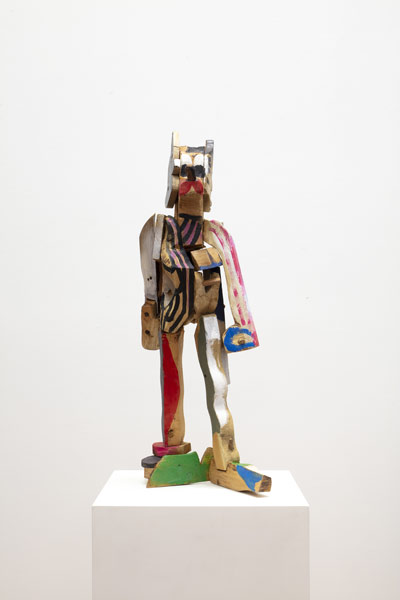
Far from chasing fleeting trends, Galería Arróniz is committed to long-term artistic careers. Housed in the iconic residence once inhabited by photographer Kati Horna in the Roma neighborhood, the gallery celebrates two decades of history with "Habitar la abstracción" (Inhabiting Abstraction), an exhibition that brings together 20 key artists from its program, curated by Cecilia Fajardo-Hill .
The exhibition is not just a chronological account, but a sensory experience that intertwines memory, architecture, and abstract language along three thematic axes: Dwelling in the Interior, Ruin-Landscape , and Inside and Outside . “Between sound installations and works that engage with the modernist geometry of the 1919 building, the exhibition invites visitors to experience art as a personal landscape ,” says art historian Cecilia Fajardo-Hill.
What was your selection criteria?
The guiding principle of this anniversary exhibition was to establish how these 20 artists reflect the unique and coherent nature of Arróniz's project. Most work with the language of abstraction or tend to abstract from found objects and elements existing in the world.
They engage with reality and the everyday, as well as with the urban, social, and natural environment, in a critical and poetic way. The title suggests that the exhibition represents a way of inhabiting abstraction in dialogue with memory , with our bodies, with daily life, and with the environment. The exhibition includes three sound installations within a field that Arróniz has been developing. Sound not only interacts with recycled materials and the relationships to reality in the works on display.
The exhibition features three spaces and themes that intertwine the outside and the inside, abstraction and reality, and temporality and space. Just as the works engage in dialogue with one another, the public is invited to engage with the exhibited art based on their own experiences and sensibilities.
How does the venue interact with the exhibition?
Kati Horna was one of Mexico's great modern photographers , and the gallery's architectural space reminds us of where we come from culturally, establishing a layer of meaning and dialogue between the modern and the contemporary, and between the geometry of the space and the abstraction of the works.
This was emphasized by the installation commissioned from the artist Perla Krauze, designed to engage in dialogue with a photograph by the artist that captures a fragment of the house's exterior. Horna marks a symbolic moment in the exhibition, just as it frames the architectural space that has housed Arróniz and the diverse aesthetic proposals of these artists over time.
Arróniz has been a breeding ground for artists whose work is featured in collections at MoMA, the Guggenheim, and the Met. What responsibility does building long-term careers entail?
This is one of the things I most respect about the Arróniz project: its long-term commitment to the artists it works with, a mutual accompaniment of their growth and evolution over time. Neither art nor working with art can be reduced to a trend or a superficial market; rather, it requires constant and consistent effort. Clearly, this has borne fruit, as these artists are included in important collections and participate in museum exhibitions.
No one is restricted by this; quite the contrary. And just as some of these artists have a second gallery, Arróniz also invites other artists to participate, always maintaining a core group of artists who define the gallery's overall direction. Curators and collectors respect this kind of commitment, rather than seeing it as restrictive. Ideal collecting isn't limited to acquiring a single work by an artist, but rather involves acquiring new works in the future that emerge from other explorations, and if these occur within the same gallery, in the context of interesting exhibitions, this is a very positive development.
The gallery combines exhibitions of represented artists with presentations in collaboration with international curators and institutions. How do you see the future of this hybrid model?
This exhibition is a prime example of an international collaborative network, where the common denominator is our continued belief in the centrality of art and artists, but also in the lived experience of art. This production process surrounding art is extremely unique and is neither generic nor impersonal. After a major boom in international art fairs, an evaluation process is underway in which what matters most are relationships, the value of art, the possibility of collaborating, socializing , and continuing to build a world of art and culture around which we can continue to enrich ourselves, learn, and find inspiration.
My belief is that art is an antidote to the depersonalization of the digital and globalized world, and instead invites us to pause, reflect and imagine through the unique material, symbolic and conceptual specificity of art and in the present body.
What message would you give to a visitor entering Arróniz for the first time?
We want to invite the public to an experience that is personal, playful, and belongs to them. The exhibition reveals how these twenty artists, who use abstraction or abstract recognizable objects, have consistently built a unique imaginary within contemporary art over twenty years in Arróniz. This imaginary coexists between the abstract and the figurative, between reality and imagination, offering us an alternative and imaginative perspective on our existence.
The exhibition is located in the gallery at Tabasco 198, Roma neighborhood.
Lejos de perseguir tendencias efímeras, la Galería Arróniz apuesta por carreras artísticas a largo plazo. Con sede en la emblemática residencia que habitó la fotógrafa Kati Horna en la colonia Roma, el espacio celebra dos décadas de trayectoria con Habitar la abstracción, una exposición que reúne a 20 artistas fundamentales de su programa bajo la curaduría de Cecilia Fajardo-Hill.
La muestra no es sólo un recuento cronológico, sino una experiencia sensorial que entrelaza memoria, arquitectura y lenguaje abstracto en tres ejes temáticos: Habitar el interior, Ruina-paisaje y Adentro y afuera. “Entre instalaciones sonoras y obras que dialogan con la geometría modernista del inmueble de 1919, la exhibición invita al visitante a transitar el arte como un paisaje personal”, dice la historiadora del arte Cecilia Fajardo-Hill.
¿Cuál fue tu criterio de selección?
El principio rector de esta muestra de aniversario era establecer cómo estos 20 artistas reflejan la naturaleza singular y coherente del proyecto de Arróniz. La mayoría trabaja con el lenguaje de la abstracción o tiende a abstraer a partir de objetos encontrados y elementos existentes en el mundo.
Dialogan con la realidad y lo cotidiano, así como con el entorno urbano, social y natural, de manera crítica y poética. El título apunta a que la muestra representa una forma de habitar la abstracción en diálogo con la memoria, con nuestros cuerpos, con la cotidianidad y con el entorno. La muestra incluye tres instalaciones sonoras dentro de un campo que Arróniz ha venido desarrollando. El sonido no sólo dialoga con los materiales reciclados y las relaciones con la realidad de obras en la muestra.
La exhibición tiene tres espacios y temas que entrelazan el afuera y el adentro, la abstracción y la realidad, y la temporalidad y el espacio. De la misma manera que las obras dialogan entre ellas, se propone que el público pueda dialogar con el arte exhibido a partir de su propia experiencia y sensibilidad.
¿Cómo dialoga la sede con la muestra?
Kati Horna fue una de las grandes fotógrafas modernas de México, y el espacio arquitectónico de la galería nos recuerda de dónde venimos culturalmente, estableciendo una capa de significado e interlocución, entre lo moderno y lo contemporáneo, y entre la geometría del espacio y la abstracción de las obras.
Esto se enfatizó con la instalación que se comisionó a la artista Perla Krauze para que dialogara con una fotografía de la artista que recoge un fragmento del exterior de la casa. Horna marca un momento simbólico de la muestra, al igual que encuadra el espacio arquitectónico que ha acogido a Arróniz y las múltiples propuestas estéticas de estos artistas en el tiempo.
Arróniz ha sido semillero de artistas presentes en colecciones del MoMA, el Guggenheim o el MET. ¿Qué responsabilidad implica construir carreras a largo plazo?
Esta es una de las cosas que más respeto del proyecto Arróniz, su compromiso prolongado con los artistas con los que trabaja, en un acompañamiento mutuo de procesos de crecimiento y evolución en el tiempo. Ni el arte ni el trabajo con el arte son reducibles a una moda o un mercado superficial, sino que conllevan un trabajo constante y consistente. Claramente esto ha dado sus frutos porque estos artistas están en colecciones importantes y participan en exhibiciones en museos.
Nadie está restringido por esto, todo lo contrario. Y de la misma manera que algunos de estos artistas tienen una segunda galería, también Arróniz invita a otros artistas a participar, siempre manteniendo la representación de un núcleo de artistas que marcan la línea general de la galería. Los curadores y coleccionistas respetan este tipo de compromiso, en vez de verlo como algo restrictivo. El coleccionismo ideal no se limita a adquirir una sola obra de un artista, sino a adquirir en un futuro nuevas obras que surgen de otras exploraciones, y si estas ocurren en una misma galería, en el contexto de exhibiciones interesantes, esto es algo muy positivo.
La galería combina exposiciones de artistas representados con presentaciones en colaboración con curadores e instituciones internacionales. ¿Cómo ves el futuro de este modelo híbrido?
Esta muestra es un buen ejemplo de una red de colaboración internacional, donde el común denominador es que seguimos creyendo en la centralidad del arte y de los artistas, pero también de la experiencia vivencial del arte. Este proceso de producción alrededor del arte es extremadamente singular y no es genérico ni despersonalizado. Después de un gran boom de ferias internacionales, se está dando un proceso de evaluación en el cual lo que cuenta más son las relaciones, el valor del arte, la posibilidad de colaborar, socializar y seguir construyendo un mundo del arte y de la cultura alrededor del cual podemos seguir enriqueciéndonos, aprendiendo, inspirándonos.
Mi apuesta es que el arte es un antídoto contra la despersonalización del mundo digital y globalizado, y más bien nos invita a pausar, reflexionar e imaginar a través de la especificidad material, simbólica y conceptual única del arte y en cuerpo presente.
¿Qué mensaje darías al visitante que entra por primera vez a Arróniz?
Queremos invitar al público que se sienta llamado a una experiencia que le pertenece, personal y lúdica. La muestra da cuenta de cómo estos veinte artistas que usan la abstracción o abstraen objetos reconocibles, a lo largo de veinte años de Arróniz, han construido de forma consistente un imaginario dentro del arte contemporáneo que es único y que coexiste entre lo abstracto y lo figurativo, entre la realidad y lo imaginario, de maneras que nos ofrecen una mirada alternativa e imaginativa de nuestra existencia.
La exposición se encuentra en la galería ubicada en Tabasco 198, colonia Roma.
No items found.