Alejandra Venegas, unafraid of color
Alejandra Venegas, sin miedo al color
She combines traditional and contemporary techniques, is inspired by the nature of Mexican landscapes, and has been chosen by Tequila Reserva de la Familia to design the box for their collection of great artists.
Une técnicas tradicionales y contemporáneas, se inspira en la naturaleza de los paisajes mexicanos y ha sido elegida por Tequila Reserva de la Familia para intervenir la caja de su colección de grandes artistas.
27.2.2026
Redaction for Gentleman Online
Redacción para Gentleman Digital
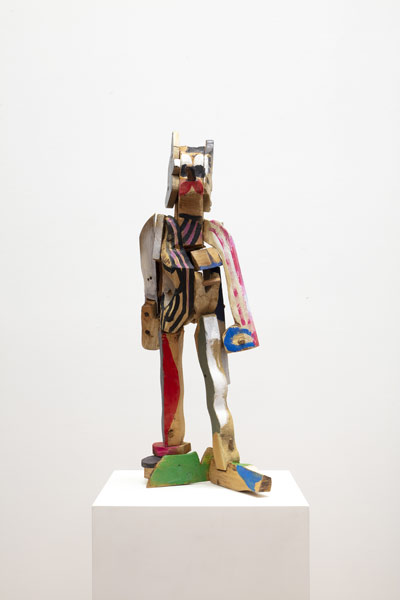
Alejandra Venegas (Mexico, 1986) tells us that during these years she has worked primarily with wood carvings and color. “On wooden boards, I create works closely linked to the natural environment where I live, which still has protected areas, in Xochimilco, a constantly changing landscape.” She was born in Xochimilco, where she lives, works, and finds inspiration: near the hill, she observes the sky and has always explored its fields and mountains. “I have also seen how the land has been transformed and how it has deteriorated due to human intervention,” she laments.
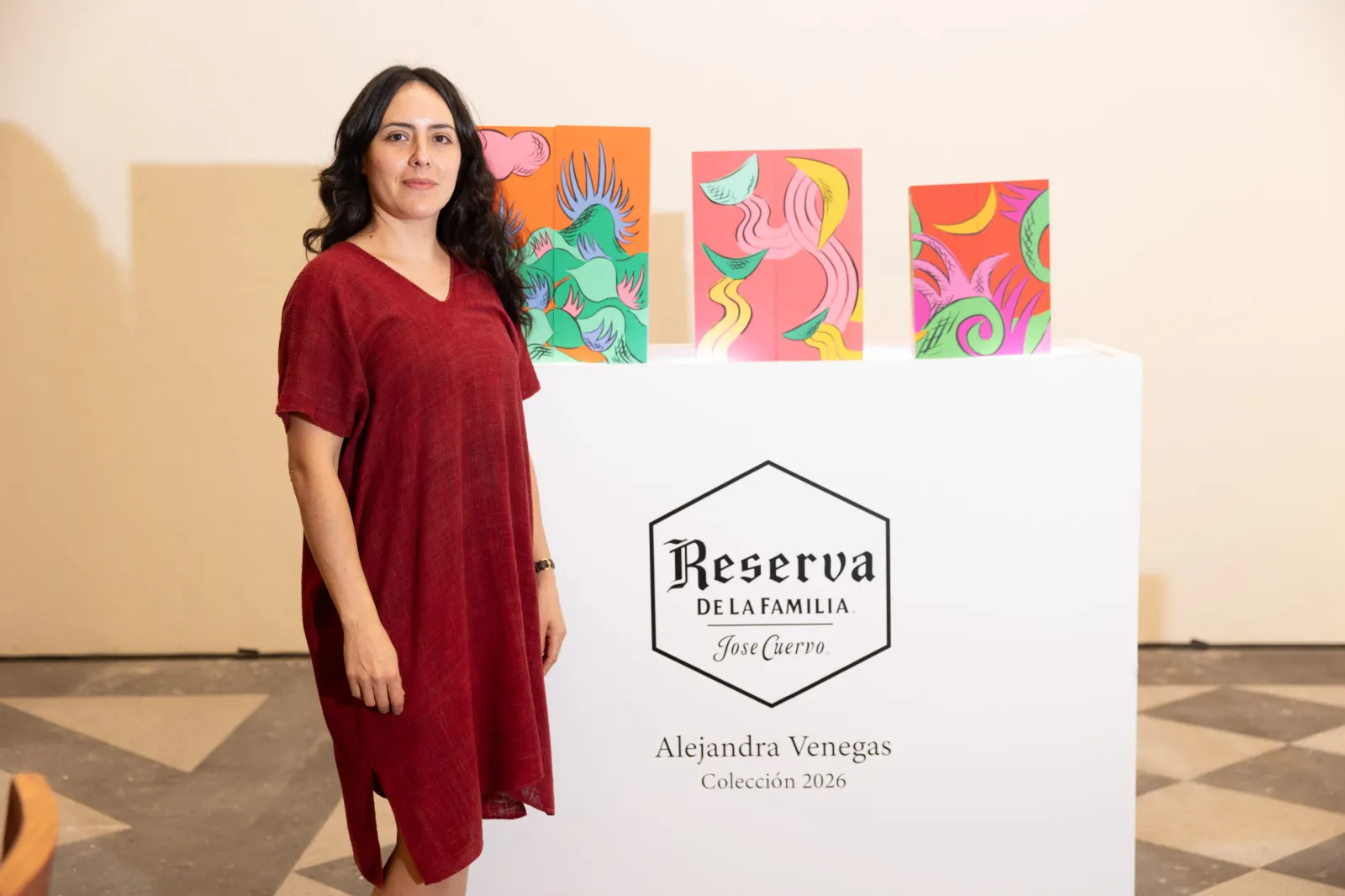
She confesses: “Color interests me greatly, linked to the roots of Mexican craftsmanship. I observe folk art extensively; my work is a play with all these elements, a dialogue between color, nature, and craftsmanship, which has been built over several years.” She recently presented the new box for Tequila Reserva de la Familia, a piece bursting with color. She thus joins artists such as Abraham Cruzvillegas, Jorge Lebrija, Dr. Lakra, and Betsabeé Romero. Alejandra details her feelings upon arriving in Jalisco: “Although my work takes place far away, I felt a strong connection being in tequila country and facing that landscape. There were many elements that I began to work with and that helped shape the piece: the atmosphere, the vegetation, the horizon.”
When I walked through the agave fields, I connected with the thorns, the sky, the Tequila volcano—all those details helped me create the box. Something I enjoy is generating relationships between things that seemingly have none, like seeing how the agave thorns can become the outlines of clouds. Nature functions as a whole: everything is intertwined.” She experienced a profound connection between the land and her work. “I identified strongly with the tequila-making process; it inspired me. The artisanal aspect, which is also present in my work, is about appreciating that everything has its time and its cycles. The jimadores' tools surprised me: the leaves of the coa, used for harvesting, have curious shapes and are what mold those sculptures that are the piñas.”
One of the recurring themes in her work is the moon, “which speaks to the growth of the agave and is very present in these boxes, along with the thorns and tools. Fire and color also play a part in the process, and this entire cosmos has inspired me, because it is the universe,” she states. She confesses to being a tequila drinker, albeit in moderation. The presentation of the boxes at Cuervo's headquarters was a true celebration, with the presence of key figures from the art world, such as Zélika García, founder of Zona MACO, and curator Patrick Charpenel, director of El Museo del Barrio in New York.
The unveiling of the box was accompanied by an exhibition that included paintings, sculptures, drawings, and wood reliefs, showcasing a wide range of her work. “I’ve worked in very varied formats, from large-scale pieces to smaller works. Designing so many boxes was a very interesting exercise; I worked with a great diversity of mediums,” she explains. She regrets not having been able to carve the wood of the boxes directly, but feels privileged to work with a three-dimensional wooden element. Venegas had long dreamed of creating carved houses and is happy with both this challenge and the exhibition. “Compared to other artists, I wanted to create something very colorful, very vibrant, that conveyed a festive spirit. I’m not afraid of color. With this work, I wanted to recapture the vibrancy of the first boxes; the world has become a bit dark, and I wanted to return to the enjoyment of color, because this is a celebration of the 30th anniversary of the Reserva de la Familia art box.” She concludes: “Celebrating nature and the earth as a gesture of gratitude.” Venegas deeply values the artisanal dimension of art. “It’s very important to recover the manual aspect. Sometimes the artist doesn’t create their own work, but for me that process is fundamental, because that’s where ideas and connections arise, when you work with your own hands.”
She adds, “Since I was a child, I was told that craftsmanship is important. My father is a sculptor, and my mother’s family were ceramists; it’s a legacy I’ve inherited.” Among the sculptors she admires is the 17th-century Japanese Buddhist monk Enkū. “He has inspired me greatly: he was able to create marvelous Buddhist forms from a simple piece of wood he found. I also admire the work of the folk masks from Michoacán, the way they are painted, and the African carved figures.” She has also collaborated with the fashion industry: she created a wooden handbag in collaboration with the brand Aurelia. “It was a very enriching experience because they worked with handcrafted objects, and in that project, I did carve the wood directly. Afterward, I was very inspired; it changed my way of thinking. When this tequila project came along, I was thrilled because I could approach it from many angles, as if everything I had done before had been preparing me for this task,” she confesses.
Alejandra Venegas (México, 1986) nos cuenta que durante estos años ha trabajado principalmente con tallas de madera y color. “En tablones de madera pongo cosas muy vinculadas con la naturaleza del espacio donde vivo, que todavía conserva zonas protegidas, en Xochimilco, paisajes en constante cambio”. Nació en Xochimilco, ahí vive, trabaja y se inspira: cerca del cerro observa el cielo y ha recorrido desde siempre sus campos y montañas. “También he visto cómo se ha transformado el territorio y cómo se ha deteriorado por la intervención humana”, se lamenta.
Confiesa: “El color me interesa mucho, unido a las raíces de la artesanía de México. Observo mucho el arte popular; mi obra es un juego con todos estos elementos, un diálogo entre color, naturaleza y artesanía, que se ha construido a lo largo de varios años”. Recientemente presentó la nueva caja de Tequila Reserva de la Familia, una pieza llena de color. Se suma así a artistas como Abraham Cruzvillegas, Jorge Lebrija, Dr. Lakra o Betsabeé Romero. Alejandra detalla sus sensaciones al llegar a Jalisco: “Aunque mi trabajo se desarrolla lejos, sentí mucha conexión al estar en tierras de tequila y frente a ese paisaje. Hubo muchos elementos con los que comencé a trabajar y que ayudaron a formar parte de la obra: la atmósfera, la vegetación, el horizonte.
Cuando caminé por los campos de agave conecté con las espinas, el cielo, el volcán de Tequila todos esos detalles me ayudaron a crear la caja. Algo que me gusta es generar relaciones entre cosas que aparentemente no la tienen, como ver cómo las espinas del agave pueden convertirse en contornos de nubes. La naturaleza funciona como un todo: todo está entrelazado”. Vivió una profunda conexión entre el territorio y su obra. “Me identifiqué mucho con los procesos del tequila; me inspiraron. La parte artesanal, que también está presente en mi trabajo, tiene que Ver con apreciar que cada cosa tiene su tiempo y sus ciclos. Las herramientas de los jimadores me sorprendieron: las hojas de la coa, utilizadas para la jima, tienen formas curiosas y son las que moldean esas esculturas que son las piñas”.
Uno de los hilos conductores de su obra es la luna, “que habla del crecimiento del agave y está muy presente en estas cajas, junto con las espinas y las herramientas. El fuego y el color también participan del proceso, y todo ese cosmos me ha inspirado, porque es el universo”, sentencia. Confiesa que es tequilera, aunque con moderación. La presentación de las cajas en la sede de Cuervo fue una auténtica celebración, con la presencia de figuras clave del mundo del arte, como Zélika García, fundadora de Zona MACO, o el curador Patrick Charpenel, director del Museo del Barrio de Nueva York.
La develación de la caja se acompañó de una exposición que incluyó pintura, escultura, dibujo y relieves en madera, donde pudo mostrar una amplia representación de su trabajo. “He trabajado en formatos muy variados, desde gran formato hasta piezas más pequeñas. El diseño de tantas cajas fue un ejercicio muy interesante; trabajé con una gran diversidad”, explica. Lamenta no haber podido tallar directamente la madera de las cajas, pero se siente privilegiada de trabajar con un elemento tridimensional y de madera. Venegas había soñado desde hace tiempo con realizar casas talladas y se muestra feliz tanto con este reto como con la exposición. “En comparación con otros artistas, quería hacer algo muy colorido, muy vivo, que transmitiera un espíritu festivo. No tengo miedo al color. Con esta obra quise recuperar el colorido de las primeras cajas; el mundo se ha vuelto un poco oscuro y quise regresar al disfrute del color, porque esta es una celebración de los 30 años de la caja de arte de Reserva de la Familia”. Y concluye: “Festejar la naturaleza y la tierra como un gesto de gratitud”. Venegas valora profundamente la dimensión artesanal del arte. “Es muy importante recuperar la parte manual. A veces el artista no realiza su propia obra, pero para mí ese proceso es fundamental, porque ahí surgen ideas y conexiones, cuando trabajas con tus propias manos”.
Añade: “Desde niña me dijeron que el oficio es importante. Mi padre es escultor y la familia de mi madre era ceramista; es un legado que he heredado”. Entre los escultores que admira destaca al monje budista japonés Enkū, del siglo XVII. “Me ha inspirado mucho: era capaz de crear maravillosas formas budistas a partir de un simple trozo de madera que encontraba. También admiro el trabajo de las máscaras populares de Michoacán, la forma en que están pintadas, y las figuras talladas africanas”. También ha colaborado con la industria de la moda: creó un bolso de madera en colaboración con la marca Aurelia. “Fue una experiencia muy enriquecedora, porque ellos trabajaban con objetos artesanales y en ese proyecto sí tallé directamente la madera. Después quedé muy inspirada, me cambió la forma de pensar. Cuando llegó este proyecto de tequila me emocioné, porque podía acercarme desde muchos frentes, como si todo lo anterior me hubiera estado preparando para esta tarea”, confiesa.
No items found.