Abel Quezada returns to the scene with portraits of a contemporary Mexico, at Museo Kaluz
Abel Quezada vuelve a la cancha con retratos de un México vigente, en el Museo Kaluz
With 82 works, several of them previously unpublished, "Mexico-Mexico-Mexico! Abel Quezada between art and sport" explores how the cartoonist used soccer as a mirror of politics, society and national identity, just as the 2026 World Cup is once again being held in Mexico.
Con 82 obras, varias de ellas inéditas, "¡México-México-México! Abel Quezada entre arte y deporte" explora cómo el dibujante utilizó el futbol como espejo de la política, la sociedad y la identidad nacional, justo cuando el Mundial 2026 vuelve a disputarse en México.
5.7.2026
Ricardo Quiroga
Ricardo Quiroga
While the Mexican team made history on Sunday night and was preparing for an unprecedented contest in its journey through the World Cup, the Kaluz Museum, located precisely in the center of Mexico City, a bustling spot for celebrations and fans of the world's most popular sport, proposes to look at the sport from another perspective: that of the political humor and social criticism of Abel Quezada (1920-1991), one of the most influential cartoonists of the 20th century in Mexico.
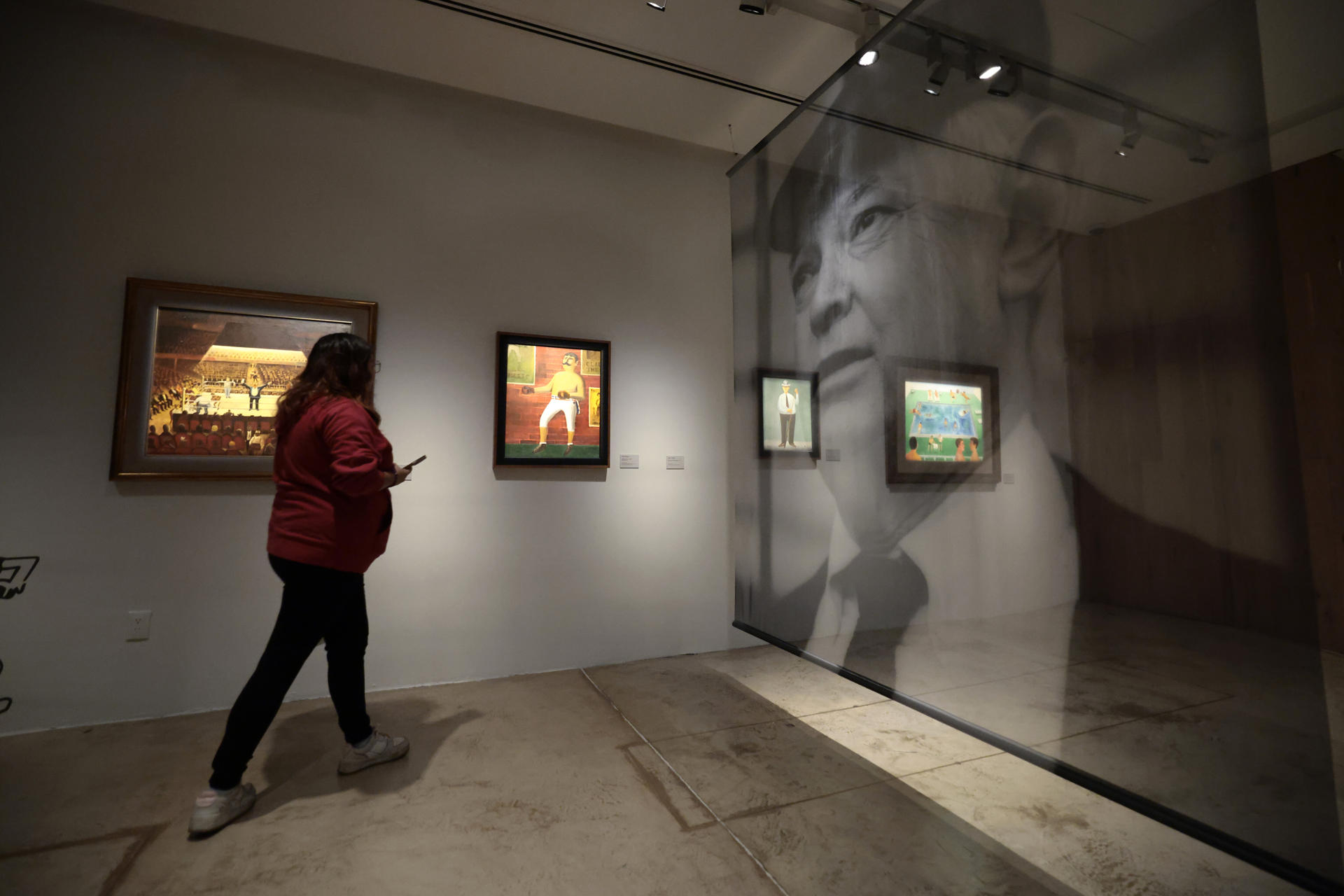
The exhibition "Mexico-Mexico-Mexico! Abel Quezada between art and sport," which opened this Sunday and runs until August 31, brings together 82 pieces—including cartoons, paintings, watercolors, and documentary material—to show that for the artist, soccer was much more than a sporting spectacle: a privileged stage for observing the excesses, contradictions, and enthusiasms of Mexican society.
The exhibition takes place during the final, but also the most exciting, stages of the World Cup in Mexico and recovers a title taken from one of Quezada's own best-known cartoons, with the intention of rereading a work whose irony remains relevant, even several decades after it was published.
"Today I believe that what he said about football is still very relevant," stated curator Ery Camara, responsible for the museum's design concept, during the media tour. In his opinion, many of the cartoons could be republished because they continue to resonate with the present.
The exhibition is structured around three main sections. The first reconstructs the artist's career through photographs, documents, travel journals, and early works; the second explores his role as a self-taught painter, interested in disciplines such as baseball, boxing, tennis, and racing; while the third brings together cartoons and paintings dedicated to soccer, where the sport appears as a metaphor for politics, the media, and collective behavior.
Camara recalled that Quezada, already an established draftsman, didn't begin painting until he was 45 and never considered himself a professional painter. "He said he was a Sunday painter," the curator explained.
The cartoonist was so modest that for years he avoided selling his work, preferring to lend it to museums or friends. Ery Camara even recounted that on the back of one of his paintings he wrote that he was lending it to the Tamayo Museum "for 99 years."
Paradoxically, that reserve contributed to his pictorial production remaining less known than his journalistic work.
The unpublished, the sport and the forms of power
Among the highlights of the exhibition are several previously unpublished cartoons preserved by the family, including "The Festival of the Scream," a satire where a witch observes a crowd overflowing a stadium while warning: "Fill every gap in your life with sports," a critique of the collective escapist mechanisms that the cartoonist developed during the eighties.
Much of this material comes from the family archive, comprised of more than 16,000 items, which continues to reveal previously unpublished documents, drawings, and texts. "We ourselves are surprised to find things often. The body of work he left behind is very rich," commented Abel Quezada Rueda, the cartoonist's son.
Although he acknowledged that his father was more of a baseball fan than a soccer fan, he maintained that he surely would have found plenty of material for new cartoons in the World Cup atmosphere. "I don't think he would have kept quiet," he remarked.
The director of the Kaluz Museum, Miguel Fernández Félix, considered that one of the greatest values of the exhibition lies precisely in recovering the archive preserved by the family and demonstrating that Quezada's work goes beyond the sporting field.
"We didn't decide that it would only be about soccer. Quezada has a much greater richness; it's about sports, but it's also about Mexico," he pointed out.
For Fernández Félix, the artist understood that stadiums, like politics, were spaces where collective behaviors and forms of power could be observed, an interpretation that remains valid in the face of major contemporary sporting events.
An interactive Quezada
The exhibition also includes a participatory room where visitors can consult historical publications, review catalogs of previous exhibitions, and interact with reproductions of characters created by Quezada to integrate them into a collective mural.
Camara also recalled that the retrospective organized by the Tamayo Museum in 1984 received around 121,000 visitors, a figure that became a record for that venue and marked the public recognition of an artistic facet that the author himself had kept in the background.
With this new review, the Kaluz Museum not only recovers Abel Quezada's relationship with sports, but also poses a question that runs through the entire exhibition: if the cartoons still seem contemporary, is it because his vision was exceptional or because the country continues to repeat many of the same scenes that he drew more than half a century ago?
Mientras la selección mexicana hizo historia la noche de este domingo y antes se preparaba para una disputa sin precedentes en su paso por los mundiales, el Museo Kaluz, ubicado precisamente en el centro de la Ciudad de México, un punto boyante en celebraciones y aficionados del deporte más popular del mundo, propone mirar el deporte desde otra tribuna: la del humor político y la crítica social de Abel Quezada (1920-1991), uno de los caricaturistas más influyentes del siglo XX mexicano.
La exposición "¡México-México-México! Abel Quezada entre arte y deporte", inaugurada este domingo y abierta hasta el 31 de agosto, reúne 82 piezas —entre cartones, pinturas, acuarelas y material documental— para mostrar que el futbol fue, para el autor, mucho más que un espectáculo deportivo: un escenario privilegiado para observar los excesos, contradicciones y entusiasmos de la sociedad mexicana.
La muestra se inserta en las fases finales, pero también las más emocionantes de la Copa Mundial a México y recupera un título tomado de uno de los cartones más conocidos del propio Quezada, con la intención de releer una obra cuya ironía conserva actualidad, incluso varias décadas después de haber sido publicada.
"Hoy creo que lo que dice del futbol es algo muy vigente", afirmó durante el recorrido para medios el curador Ery Camara, responsable del concepto museográfico. A su juicio, muchas de las caricaturas podrían publicarse nuevamente porque siguen dialogando con el presente.
La exposición se articula en tres núcleos. El primero reconstruye la trayectoria del artista mediante fotografías, documentos, cuadernos de viaje y obras tempranas; el segundo explora su faceta como pintor autodidacta, interesado en disciplinas como el béisbol, el boxeo, el tenis y las carreras; mientras que el tercero reúne cartones y pinturas dedicados al futbol, donde el deporte aparece como metáfora de la política, los medios y el comportamiento colectivo.
Camara recordó que Quezada, siendo ya un consagrado del dibujo, comenzó a pintar hasta los 45 años y nunca se asumió como un pintor profesional. "Decía que era un pintor de domingos", explicó el curador.
La modestia del monero fue tal que durante años evitó comercializar sus obras y prefería prestarlas a museos o amigos. Incluso, relató Ery Camara, en el reverso de una de las pinturas escribió que la prestaba al Museo Tamayo "por 99 años".
Paradójicamente, esa reserva contribuyó a que su producción pictórica permaneciera menos conocida que su trabajo periodístico.
Los inéditos, el deporte y las formas de poder
Entre las novedades de la exposición destacan varios cartones inéditos conservados por la familia, entre ellos “La fiesta del alarido”, una sátira donde una bruja observa una multitud que desborda un estadio mientras advierte: "Todo hueco en tu vida llénalo con deportes", una crítica a los mecanismos de evasión colectiva que el caricaturista desarrolló durante los años ochenta.
Gran parte de este material proviene del archivo familiar, integrado por más de 16 mil piezas, que continúa revelando documentos, dibujos y textos inéditos. "Nosotros mismos nos sorprendemos de encontrar cosas seguido. Es muy rica la obra que dejó", comentó Abel Quezada Rueda, hijo del caricaturista.
Aunque reconoció que su padre era más aficionado al béisbol que al futbol, sostuvo que seguramente habría encontrado en el ambiente mundialista materia suficiente para nuevos cartones. "No creo que se hubiera quedado callado", comentó.
El director del Museo Kaluz, Miguel Fernández Félix, consideró que uno de los mayores valores de la muestra consiste precisamente en recuperar el archivo preservado por la familia y demostrar que la obra de Quezada rebasa el ámbito deportivo.
"No decidimos que solamente fuera el tema del futbol. Quezada tiene una riqueza mucho mayor; es el deporte, pero también es México", señaló.
Para Fernández Félix, el artista entendía que los estadios, igual que la política, eran espacios donde podían observarse las conductas colectivas y las formas del poder, una lectura que mantiene vigencia frente a los grandes acontecimientos deportivos contemporáneos.
Un Quezada interactivo
La exposición también incorpora una sala participativa donde los visitantes pueden consultar publicaciones históricas, revisar catálogos de exposiciones anteriores e intervenir reproducciones de personajes creados por Quezada para integrarlas a un mural colectivo.
Camara recordó además que la retrospectiva organizada por el Museo Tamayo en 1984 recibió alrededor de 121 mil visitantes, cifra que se convirtió entonces en un récord para ese recinto y que marcó el reconocimiento público de una faceta artística que el propio autor había mantenido en segundo plano.
Con esta nueva revisión, el Museo Kaluz no sólo recupera la relación de Abel Quezada con el deporte, sino que plantea una pregunta que atraviesa toda la exposición: si las caricaturas siguen pareciendo contemporáneas, ¿es porque su mirada fue excepcional o porque el país continúa repitiendo muchas de las mismas escenas que él dibujó hace más de medio siglo?
No items found.