18 Questions With... Chantal Peñalosa Fong
18 preguntas con…Chantal Peñalosa Fong
"18 Questions With" is an interview series featuring the artists, curators, and gallerists driving art's next wave.
“18 Questions With” es una serie de entrevistas que presenta a los artistas, curadores y galeristas que están impulsando la próxima ola del arte.
28.4.2026
By UntitledDB
Por UntitledDB
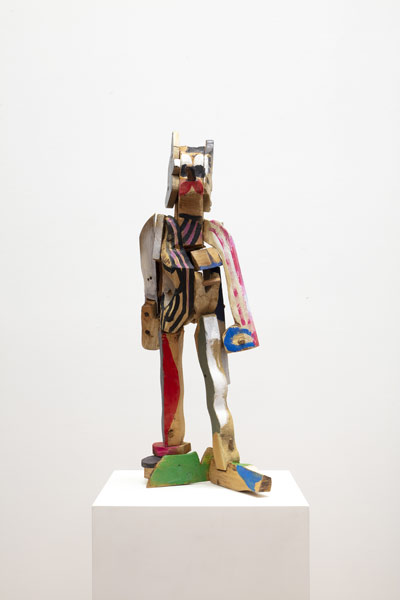
Chantal Peñalosa Fong is a multidisciplinary artist based in NYC whose practice moves across image-making, sculptural form, installation, writing, and performance. Born in the US-Mexico border region, her work considers how waiting, suspension, violence, and spectral presence shape everyday life in threshold spaces. Drawing on archival research, site-based inquiry, collaboration, and lived history, she brings forward stories and sites left outside authorized narratives, giving form to what remains unseen. Her recent projects trace how migration, labor, and displacement link the United States, Mexico, and China, connecting geopolitical history to personal experience.
Q01:
How did growing up beside the border shape the way you experience the world?
A01:
The border entered life before language or analysis. Faith works through things not necessarily visible but that do influence behavior. I experience the border as a kind of involuntary faith: a sphere in which you participate even though you did not choose it.
I grew up two blocks from the border wall between Mexico and the United States; it is my landscape. It was literally my playground when I was a child. Later, as a teenager, it became my favorite place to walk and think. This is the last street of Mexico and is actually a very silent zone. It was there that I began to practice contemplation: what am I in this, and what of this is inside me? I know this may sound strange, but I don’t want to hide it. The border where I grew up became a meditative space-time early in my life. A place where I thought and walked. A place where I contemplated myself and the world.
That contemplative disposition still remains my guide today for experiencing the world and for translating that experience into my work.
I know it sounds odd to speak about silence in a place usually associated with noise. The border is a place with lots of energies crossing.
I first perceived it somatically (it's my home!) before understanding it intellectually. It enters through routines that arise from the interaction of languages, from the naturalized fact of doing things on one side and the other, being on the Mexican side listening to the radio in English, going to buy groceries or clothes and then returning… it enters through routines, sounds, detours, but also warnings and permissions.
It allows you to participate in multiple realities occurring at the same time: one language crossing into another, one economy projecting its shadow over another, one legal framework pressed against another, one fantasy of nation colliding with everyday life, which always exceeds it. In that sense, the border is never a binary condition. It is not simply here or there, inside or outside. It is a superimposed field of contradictions, negotiations, leakages, and simultaneous truths. It's an atmospheric condition.
I would say that the border taught me to live and feel intensely.
Q02:
What does the border smell like?
A02:
At the point of entry, there is a mixture between a bureaucratic office and a very official smell that little by little starts mixing with the air of everyday life until it transforms into something else, as if the air also crossed.
I am a fragrance lover; perfumes are one of my weaknesses. I find aromas extremely sensual, and for that reason, every time I crossed the border, it became very easy for me to perceive that smells were different from one side to the other… At some point I decided to knock on the door of a chemist’s laboratory at the Autonomous University in Tijuana to ask him about this phenomenon.
We started a conversation about air, the processes for creating fragrances, distillates, and eventually a small group helped me develop and investigate which aromas are the most predominant in the crossing area between San Diego and Tijuana. The result was six essences: on the Mexican side: smog, trash, and carne asada tacos. United States: new car plastic, plants, and McDonald’s french fries.
The whole matter of doing laboratory tests with all its protocols was a very interesting process. Our lab discussions were both very serious and fun when, for instance, we needed to decide if the scent we were creating was really taco-like or not yet.
Putting the border into a bottle has been one of the strangest things I’ve done.
Q03:
What can the air of a city reveal about the life inside it?
A03:
“All that is solid melts into air”, but within the air the earthly also remains contained. I’m interested in knowing what the invisible is made of.
When I worked with the group of chemists, we discussed how certain aspects of our lives are contained in the invisible, in what we don’t see but that circulates and has presence. In this case, in the form of aromas that compose a city. Aromas register our everyday lives, from the foods we consume, the level of vegetation, the treatments given to trash in a place, etc. I think that if we think of it in reverse, if we first remember the smell of the city we are in, portions of the image of what that city is begin to appear.
So not only does “all that is solid melt into air”, but air also reveals the fiction of the solid.
Q04:
How do lived experience and critical theory meet in your work?
A04:
It really begins with intuition. I perceive something, notice some sign, and then I find out how it connects with other experiences. Suddenly something clicks, and a new reading of something emerges. That is when that other process of research would begin, which in my practice simply means creating constellations to expand that first intuition and letting it find ways to converge with many things. It is like opening small portals to instigate new interpretations of something.
This constellation mixes lived experiences and critical theory.
I’m rigorously interested in exploring theory because, for me, art is a place that proposes thought through an aesthetic experience. In art, concepts stem out of beauty, the retinal, and emotions.
Q05:
What is a repetitive action you return to when you need to think clearly?
A05:
I walk and walk. I go out with the idea of not wanting to find anything; I only observe without any prejudice. It's an exercise in meditation: to see without giving meaning. To observe. And suddenly there is a revelation; something happens that stays with me, not as an answer, but perhaps as a clue.
There is an idea that artists create worlds through their works, but for me it is important not to stop seeing this world; otherwise, I feel disconnected. It becomes a very closed conversation.
Q06:
What do you trust more: an archive, an oral story, or a remembered image?
A06:
I actually distrust all of them! But it is precisely there that histories can be rethought, given new meanings, and reworked. Every archive definitely always omits information, so an archive is a partial truth. Oral stories keep mutating from voice to voice; with each transmission, layers are added that shape it. I am interested in the crossing between memory and fiction, for example. There is something so unstable and vulnerable in all of this that it is precisely there that I find its power: in the incomplete, in what is shifting, in that which resists being fully fixed.
Q07:
What is the most important thing you have learned from family storytelling?
A07:
For me, it is important to recognize and value the stories that emerge from the geopolitical, from decisions that exist beyond individual control. People generally do not choose the forces that shape their lives. And yet, it is within those conditions that our ideas about love, loneliness, values, beliefs, and gestures are formed. So for me, it is important to unravel this, to understand why we love the way we love, where desire comes from, where our ambitions come from, and generally, the answer is that we are responding to larger structures that were imposed by other political and social processes in which someone else made that decision.
Family stories have taught me to pay attention to how large historical movements become intimate realities, and also to question how much of every inherited story is intertwined with fiction.
Q08:
What draws you to formats like the letter, the diary, or the voiceover?
A08:
They are spaces where voices emerge from an intimate zone, often addressed to a very specific destination, or, in the case of the diary, with no destination at all, but rather as a form of self-confession. There is something naked about it for oneself, because it is a form of writing not intended for the outside world at the moment of its creation. Deciding to reveal it is like revealing another part of the body that is not always visible.
In my work, it is a way of making myself present through the voice. I think I'm even more interested in reflecting on the implications of using the voice and in having the ability to manifest something from that place. When I had just moved to the United States, it was very curious to meet someone new and have them ask, “What’s your story?” In the end, we are made of stories. We are always searching for the story behind everything we do and live, and deciding which ones we choose to keep. I'm interested in thinking of the voice as a zone of resistance.
Q09:
What is the most complicated emotion you feel about inheritance?
A09:
Silence. Silence can hold memory, desire, protection, shame, love, and survival all at once.
Q10:
When you use AI, what part of the process still feels most human to you?
A10:
The most human part of the process is still desire: the impulse behind why I ask for something, what I'm searching for, what I hope to recover or understand. AI can generate images or language, but it cannot replace intuition, longing, memory, doubt, or the emotional stakes that guide a work. For me, the human part remains in choosing, editing, interpreting, and deciding what matters.
Q11:
What interested you about placing your grandmother’s memory in dialogue with AI?
A11:
More than the final result, what mattered most to me was the equation itself: placing my 96-year-old grandmother in dialogue with the technology of this time and seeing what would happen. I was interested in the encounter between two radically different temporalities - her ideas, shaped by nearly a century of experience, and a tool built on speed, prediction, and synthetic image-making.
For me, it was a way of bringing together two different archives, two different memories, and seeing what they could generate. My grandmother was the first generation born in Mexico to Chinese migrant parents, and she grew up during the period of anti-Chinese campaigns in Mexico. She never went to China, yet she described it to me all the time. So I used her descriptions as prompts to generate the images, and in the end, she decided which ones were the most accurate to her own “personal China.”
The images are printed on thick cotton paper, which I then intervene on with watercolor.
My entire project on the Chinese diaspora has, above all, to do with imagination. What is that place that emerges, and how is it projected from the outside, from the echo?
Q12:
What is a phrase someone told you about China that you still carry?
A12:
The Chinese food there
Not the Chinese food here
Q13:
If you could bottle one non-border smell that still belongs in your practice, what would it be?
A13:
The smell of Los Angeles: weathered wood, old carpet, plants, weed, and fresh wind. It’s a scent I find deeply relaxing, familiar and strange at the same time, and it makes me think of Hollywood and the city’s noir side.
Q14:
What's inspiring you right now?
A14:
What inspires me most at this moment is stopping at some point during the day to look at the sky.
Q15:
What are you listening to in your studio?
A15:
Too many different things, but it depends, of course, on the mood. Sometimes I need to self-induce a specific state, so I listen to things without lyrics, most of the time ambient, minimalist, or techno.
This week, for example, I’ve been listening to the latest EP by Caterina Barbieri, Oneohtrix Point Never, and Boards of Canada, which I hadn’t listened to in a long time. Sometimes I listen to sexy things like Bryan Ferry or Air.
I listen to the music of my friends, Hexorcismos and Carla Morrison, because they inspire me and I love them.
Music is very important to me. I first studied music before studying visual arts; there are very few days when there is no music in my life.
Q16:
Most recent purchase?
A16:
I just repurchased bird seed. I discovered this year here in New York that feeding little birds and pigeons brings me so much joy.
Q17:
A film everyone should watch?
A17:
Teorema by Pier Paolo Pasolini is the best example of how a work of art can bring down an entire system.
Q18:
Favorite city?
A18:
Shanghai, even though I’ve never been there, I dream about it all the time.
Chantal Peñalosa Fong es una artista multidisciplinaria radicada en Nueva York cuya práctica transita entre la creación de imágenes, la forma escultórica, la instalación, la escritura y la performance. Nacida en la región fronteriza entre Estados Unidos y México, su trabajo reflexiona sobre cómo la espera, la suspensión, la violencia y la presencia espectral configuran la vida cotidiana en espacios liminales. A partir de investigación de archivo, indagación situada, colaboración e historia vivida, hace emerger relatos y lugares que quedan fuera de las narrativas autorizadas, dando forma a aquello que permanece invisible. Sus proyectos recientes rastrean cómo la migración, el trabajo y el desplazamiento vinculan a Estados Unidos, México y China, conectando la historia geopolítica con la experiencia personal.
P01:
¿Cómo moldeó tu forma de experimentar el mundo haber crecido junto a la frontera?
R01:
La frontera entró en mi vida antes que el lenguaje o el análisis. La fe opera a través de cosas que no necesariamente son visibles, pero que sí influyen en el comportamiento. Yo experimento la frontera como una especie de fe involuntaria: una esfera de la que participas aunque no la hayas elegido.
Crecí a dos cuadras del muro fronterizo entre México y Estados Unidos; ese es mi paisaje. Literalmente fue mi patio de juegos cuando era niña. Más tarde, en mi adolescencia, se convirtió en mi lugar favorito para caminar y pensar. Esa es la última calle de México y, en realidad, es una zona muy silenciosa. Fue ahí donde empecé a practicar la contemplación: ¿qué soy yo en esto y qué de esto habita en mí?
Sé que puede sonar extraño, pero no quiero ocultarlo. La frontera donde crecí se convirtió muy pronto en un espacio-tiempo meditativo. Un lugar donde caminaba y pensaba. Un lugar donde me contemplaba a mí misma y al mundo.
Esa disposición contemplativa sigue guiando hoy mi manera de experimentar el mundo y de traducir esa experiencia en mi trabajo.
Sé que puede sonar raro hablar de silencio en un lugar normalmente asociado con ruido. La frontera es un lugar atravesado por muchísimas energías.
Primero la percibí somáticamente (¡es mi hogar!) antes de comprenderla intelectualmente. Entra a través de rutinas que nacen de la interacción entre lenguas, del hecho naturalizado de hacer cosas de un lado y del otro: estar en México escuchando radio en inglés, cruzar a comprar comida o ropa y luego regresar… entra por rutinas, sonidos, desvíos, pero también por advertencias y permisos.
Te permite participar en múltiples realidades que ocurren al mismo tiempo: una lengua cruzando hacia otra, una economía proyectando su sombra sobre otra, un marco legal presionado contra otro, una fantasía nacional colisionando con la vida cotidiana, que siempre la excede.
En ese sentido, la frontera nunca es una condición binaria. No es simplemente aquí o allá, adentro o afuera. Es un campo superpuesto de contradicciones, negociaciones, filtraciones y verdades simultáneas. Es una condición atmosférica.
Diría que la frontera me enseñó a vivir y a sentir intensamente.
P02:
¿A qué huele la frontera?
R02:
En el punto de cruce hay una mezcla entre oficina burocrática y un olor muy oficial que poco a poco empieza a mezclarse con el aire de la vida cotidiana hasta transformarse en otra cosa, como si el aire también cruzara.
Soy amante de las fragancias; los perfumes son una de mis debilidades. Encuentro los aromas extremadamente sensuales, y por eso, cada vez que cruzaba la frontera, me resultaba muy fácil percibir que los olores eran distintos de un lado y del otro.
En algún momento decidí tocar la puerta de un laboratorio químico de la Universidad Autónoma de Tijuana para preguntarle a un químico sobre este fenómeno.
Empezamos una conversación sobre el aire, los procesos de creación de fragancias, destilados, y eventualmente un pequeño grupo me ayudó a desarrollar e investigar cuáles eran los aromas predominantes en la zona de cruce entre San Diego y Tijuana.
El resultado fueron seis esencias:
Lado mexicano: smog, basura y tacos de carne asada.
Estados Unidos: plástico de auto nuevo, plantas y papas fritas de McDonald’s.
Todo el proceso de hacer pruebas de laboratorio con todos sus protocolos fue fascinante. Nuestras discusiones eran muy serias y muy divertidas cuando, por ejemplo, teníamos que decidir si el aroma que estábamos creando realmente olía a taco o todavía no.
Embotellar la frontera ha sido una de las cosas más extrañas que he hecho.
P03:
¿Qué puede revelar el aire de una ciudad sobre la vida que contiene?
R03:
“Todo lo sólido se desvanece en el aire”, pero dentro del aire también permanece contenido lo terrestre. Me interesa saber de qué está hecho lo invisible.
Cuando trabajé con el grupo de químicos, hablábamos de cómo ciertos aspectos de nuestras vidas están contenidos en lo invisible, en aquello que no vemos pero circula y tiene presencia.
En este caso, en forma de aromas que componen una ciudad.
Los aromas registran nuestra vida cotidiana: los alimentos que consumimos, el nivel de vegetación, el tratamiento que se le da a la basura, etc.
Creo que si lo pensamos al revés, si primero recordamos el olor de la ciudad en la que estamos, comienzan a aparecer fragmentos de su imagen.
Así que no sólo “todo lo sólido se desvanece en el aire”; el aire también revela la ficción de lo sólido.
P04:
¿Cómo se encuentran la experiencia vivida y la teoría crítica en tu trabajo?
R04:
Todo comienza con una intuición. Percibo algo, noto una señal y luego descubro cómo conecta con otras experiencias.
De pronto algo hace clic y emerge una nueva lectura.
Entonces comienza ese otro proceso de investigación que, en mi práctica, significa crear constelaciones para expandir esa intuición inicial y dejar que encuentre formas de converger con muchas cosas.
Es como abrir pequeños portales para detonar nuevas interpretaciones.
Esa constelación mezcla experiencia vivida y teoría crítica.
Me interesa rigurosamente explorar la teoría porque, para mí, el arte es un lugar que propone pensamiento a través de una experiencia estética.
En el arte, los conceptos nacen de la belleza, de lo retiniano y de la emoción.
P05:
¿Qué acción repetitiva realizas cuando necesitas pensar con claridad?
R05:
Camino y camino.
Salgo con la idea de no querer encontrar nada; sólo observo sin prejuicios.
Es un ejercicio de meditación: ver sin atribuir significado.
Observar.
Y de pronto hay una revelación; algo ocurre y permanece conmigo, no como una respuesta, sino quizá como una pista.
Existe esta idea de que los artistas crean mundos a través de sus obras, pero para mí es importante no dejar de mirar este mundo; de lo contrario me siento desconectada.
Se convierte en una conversación demasiado cerrada.
P06:
¿En qué confías más: un archivo, una historia oral o una imagen recordada?
R06:
¡En realidad desconfío de los tres!
Pero precisamente ahí es donde las historias pueden repensarse, resignificarse y rehacerse.
Todo archivo omite información; un archivo es siempre una verdad parcial.
Las historias orales mutan de voz en voz; con cada transmisión se añaden capas que las modelan.
Me interesa el cruce entre memoria y ficción.
Hay algo tan inestable y vulnerable en todo esto que justo ahí encuentro su potencia: en lo incompleto, en lo que cambia, en aquello que resiste fijarse del todo.
P07:
¿Qué es lo más importante que has aprendido de las historias familiares?
R07:
Para mí es importante reconocer y valorar las historias que emergen de lo geopolítico, de decisiones que existen más allá del control individual.
La gente generalmente no elige las fuerzas que moldean su vida.
Y sin embargo, es dentro de esas condiciones donde se forman nuestras ideas sobre el amor, la soledad, los valores, las creencias y los gestos.
Para mí es importante desentrañar esto: entender por qué amamos como amamos, de dónde viene el deseo, de dónde vienen nuestras ambiciones.
Y generalmente la respuesta es que estamos respondiendo a estructuras mayores impuestas por procesos políticos y sociales donde alguien más tomó esa decisión.
Las historias familiares me han enseñado a observar cómo los grandes movimientos históricos se convierten en realidades íntimas, y también a cuestionar cuánto de toda historia heredada está entrelazado con la ficción.
P08:
¿Qué te atrae de formatos como la carta, el diario o la voz en off?
R08:
Son espacios donde las voces emergen desde una zona íntima, muchas veces dirigidas a un destino muy específico o, en el caso del diario, sin destino alguno, como una forma de autoconfesión.
Hay algo desnudo en ello.
Porque es una escritura que, en el momento de ser creada, no está pensada para el exterior.
Decidir revelarla es como mostrar otra parte del cuerpo que no siempre es visible.
En mi trabajo, es una manera de hacerme presente a través de la voz.
Incluso me interesa más reflexionar sobre las implicaciones de usar la voz y sobre la capacidad de manifestar algo desde ese lugar.
Cuando recién me mudé a Estados Unidos, me parecía curioso conocer a alguien nuevo y que me preguntara: “¿Cuál es tu historia?”
Al final, estamos hechos de historias.
Siempre estamos buscando la historia detrás de todo lo que hacemos y vivimos, y decidiendo cuáles elegimos conservar.
Me interesa pensar la voz como una zona de resistencia.
P09:
¿Cuál es la emoción más compleja que sientes respecto a la herencia?
R09:
Silencio.
El silencio puede contener memoria, deseo, protección, vergüenza, amor y supervivencia al mismo tiempo.
P10:
Cuando usas IA, ¿qué parte del proceso sigue sintiéndose más humana?
R10:
La parte más humana sigue siendo el deseo: el impulso detrás de por qué pido algo, qué estoy buscando, qué espero recuperar o comprender.
La IA puede generar imágenes o lenguaje, pero no puede reemplazar la intuición, el anhelo, la memoria, la duda ni la carga emocional que guía una obra.
Para mí, lo humano permanece en elegir, editar, interpretar y decidir qué importa.
P11:
¿Qué te interesaba de poner la memoria de tu abuela en diálogo con la IA?
R11:
Más que el resultado final, lo que más me importaba era la ecuación misma: poner a mi abuela de 96 años en diálogo con la tecnología de este tiempo y ver qué sucedía.
Me interesaba el encuentro entre dos temporalidades radicalmente distintas: sus ideas, moldeadas por casi un siglo de experiencia, y una herramienta construida sobre velocidad, predicción y producción sintética de imágenes.
Para mí fue una forma de reunir dos archivos y dos memorias distintas para ver qué podían generar.
Mi abuela fue la primera generación nacida en México de padres migrantes chinos y creció durante las campañas antichinas en México.
Nunca fue a China, y sin embargo me la describía todo el tiempo.
Usé sus descripciones como prompts para generar imágenes y, al final, ella eligió cuáles eran las más fieles a su propia “China personal”.
Las imágenes están impresas en papel grueso de algodón, sobre el que luego intervengo con acuarela.
Todo mi proyecto sobre la diáspora china tiene que ver, sobre todo, con la imaginación.
¿Qué lugar emerge ahí y cómo se proyecta desde afuera, desde el eco?
P12:
¿Qué frase sobre China te dijeron que todavía conservas?
R12:
“La comida china de allá
No es la comida china de aquí.”
P13:
Si pudieras embotellar un olor no fronterizo que siga perteneciendo a tu práctica, ¿cuál sería?
R13:
El olor de Los Ángeles: madera envejecida, alfombra vieja, plantas, marihuana y viento fresco.
Es un aroma profundamente relajante, familiar y extraño al mismo tiempo, y me hace pensar en Hollywood y en el lado noir de la ciudad.
P14:
¿Qué te inspira en este momento?
R14:
Lo que más me inspira ahora mismo es detenerme en algún momento del día para mirar el cielo.
P15:
¿Qué estás escuchando en tu estudio?
R15:
Muchísimas cosas distintas, depende del estado de ánimo.
A veces necesito inducirme un estado específico, así que escucho música sin letras, la mayoría del tiempo ambient, minimalista o techno.
Esta semana, por ejemplo, he estado escuchando el último EP de Caterina Barbieri, Oneohtrix Point Never y Boards of Canada, a quienes no escuchaba desde hace tiempo.
A veces escucho cosas sexys como Bryan Ferry o Air.
También escucho la música de mis amigos, Hexorcismos y Carla Morrison, porque me inspiran y los quiero.
La música es muy importante para mí.
Primero estudié música antes de estudiar artes visuales; hay muy pocos días en mi vida sin música.
P16:
¿Compra más reciente?
R16:
Acabo de volver a comprar semillas para pájaros.
Descubrí este año aquí en Nueva York que alimentar pajaritos y palomas me da muchísima alegría.
P17:
¿Una película que todo el mundo debería ver?
R17:
Teorema, de Pier Paolo Pasolini, es el mejor ejemplo de cómo una obra de arte puede derribar todo un sistema.
P18:
¿Ciudad favorita?
R18:
Shanghái, aunque nunca he estado ahí.
Sueño con ella todo el tiempo.
Photo: D. Josh / Courtesy: Chantal P. Fong
Foto: D. Josh / Cortesía: Chantal P. Fong
No items found.